
Updated August 2026: This article is based on my own teaching experience in Thailand. The visa, work-permit, and teacher-permission information below was reviewed against current Thai government guidance, but requirements can change and individual schools may follow different processes. Always verify your own situation with the school and the relevant Thai authorities.
I did not need a job I could take anywhere. I needed a job that changed where ordinary life started.
If you are researching teaching in Thailand, the practical questions still matter:
Salary
School Calendars
Hiring
Visas
Work Permits
And whether the job leaves enough time to travel. My experience gave me answers to some of those questions, but it also changed the question I was asking.My first role was volunteering as an English teacher in Isaan. Later, I moved into a paid secondary-school science position in southern Thailand. What started as a way to leave eventually became five years of teaching and a much more ordinary life than the phrase "living abroad" tends to suggest.
I did not move to Thailand because I had figured out how to build a life around travel. I went because pre-med had stopped feeling like my life, the plan I had been following no longer made much sense, and I wanted to go somewhere.
Teaching in Thailand: Quick Facts From My Experience
Role: Secondary-school science teacher at a public school in southern Thailand.
Path: Volunteer English teacher first, then a paid science-teaching position.
Salary during my time there: Around 30,000 to 40,000 baht per month was common among foreign teachers I knew, with some offers below that range.
School calendar: Two terms, with an October break and a longer break around March or April at my school.
Christmas: Not automatically a day off at my Thai public school.
Travel time: Weekends, Thai public holidays, and term breaks.
Immigration and work: My ability to stay and work in Thailand was connected to my employer and came with rules.
How I Started Teaching in Thailand
I started as a volunteer English teacher in a remote part of Isaan, Thailand's northeastern region. I lived on a stipend for a year. It was enough for the experience I had chosen, but eventually I wanted a regular salary and more control over what came next.
That is how I moved into a secondary-school science position at a public school in southern Thailand. My pre-med coursework and Chemistry minor helped me compete for science positions, which were a different lane from the English-teaching jobs most people associate with foreign teachers in Thailand.
My American passport helped too. I do not want to pretend the hiring market was neutral. Schools can place real weight on passport, native-English-speaker status, appearance, degree, subject area, and location. I wrote more about the racial and cultural side of that experience in Living in Thailand as a Woman of Color.
The important distinction is that my route was not a universal checklist. It was one route through a very uneven teaching market.
What the Thailand Public-School Calendar Looked Like for Me
At my school, the academic year was divided into two terms. The first began around late April or May and ran until October. We had an October break, then returned for the second term and continued until around March or April.
Christmas was not automatically a holiday. If Christmas fell on a workday, I went to work. I did, however, receive Thai public holidays, and there were many of them throughout the year. Exact calendars differ by school, so the contract and school schedule matter more than assumptions about when teachers should be free.
The schedule gave my life a rhythm. Most weeks I had a classroom to return to. Then holidays, weekends, and term breaks created windows when I could see more of Thailand or travel farther.

Can You Travel While Teaching in Thailand?
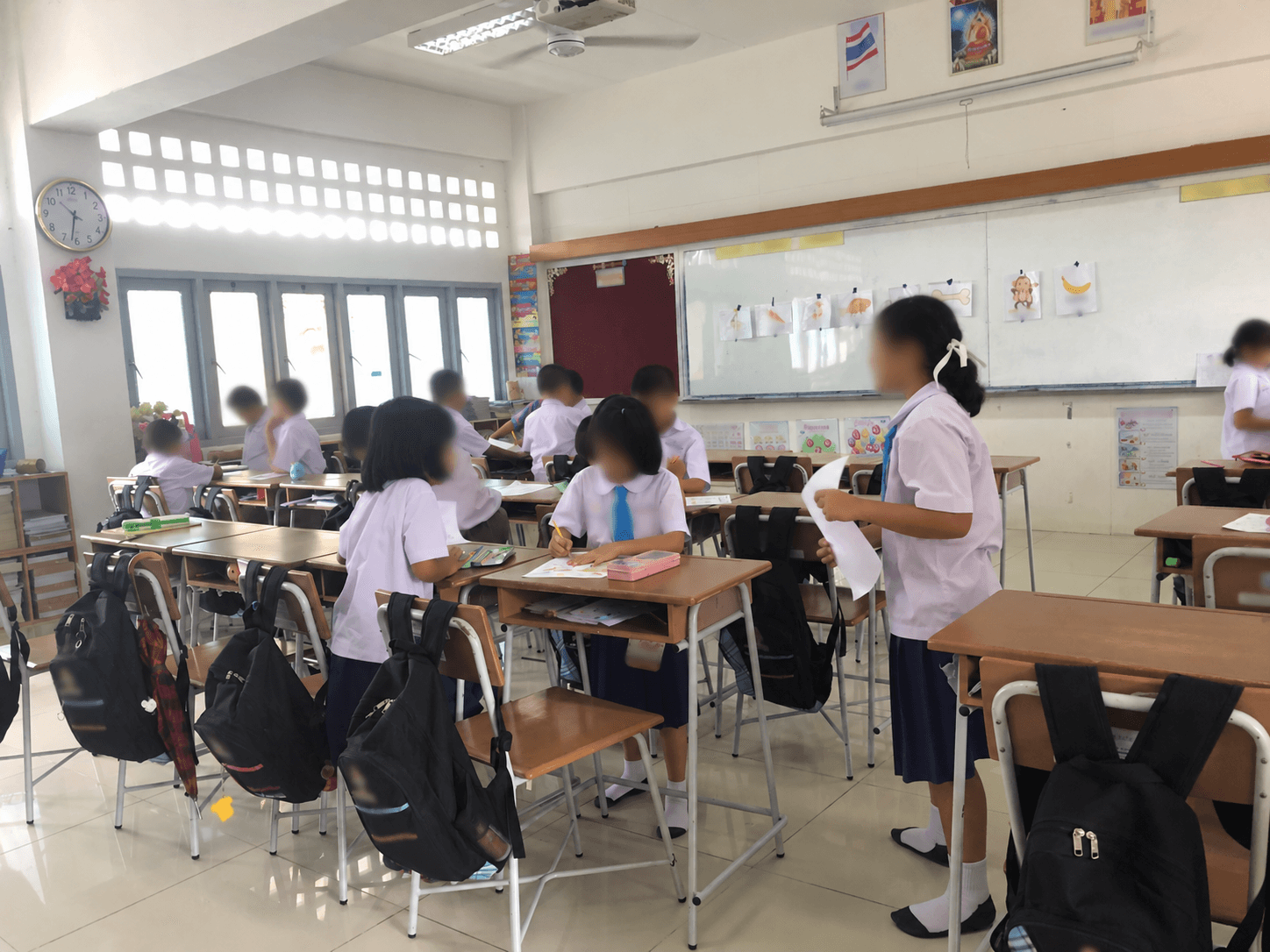
I was not working from a laptop on a different island every week. I reported to a school. I taught students, followed a dress code, attended school activities, and planned my life around a timetable that belonged to someone else.
That sounds less glamorous than "work from anywhere." It was also what made travel practical for me.
Living in Thailand changed the distance between me and the places I wanted to see. A weekend trip no longer required a flight across the Pacific. Beaches, islands, night markets, and neighboring provinces became part of ordinary life. Longer school breaks made bigger trips possible.
I still had a job to return to on Monday. The difference was what could fit between one Monday and the next.
Teaching in Thailand Salary: What 30,000 to 40,000 Baht Afforded Me
Among foreign teachers in Thai public schools, 30,000 to 40,000 baht per month was a common range during my time there, and some offers were lower. That is a description of what I saw, not a promise of what a school will offer today. Pay varies by school type, location, qualifications, subject, and experience.
The money could support a comfortable local life, especially outside Thailand's most expensive tourist areas. But it disappeared quickly if you tried to keep up with the Joneses, ate in tourist restaurants every day, booked every popular excursion, or treated each weekend like a vacation package.
I had to choose. I could spend like a tourist all month, or I could build an ordinary life and save certain experiences for the times that mattered most. Travel was possible because I planned around the salary, not because the salary made me rich.
Can You Live on a Teaching Salary in Thailand?
For me, yes, but the answer depended heavily on how I lived. I built a local routine rather than trying to recreate a vacation every day. Housing, location, food habits, transportation, debt, and how often you travel can completely change what the same salary feels like.
Teaching in Thailand Visa and Work Permit: What I Learned
My teaching job did not come with vague permission to live and work anywhere in Thailand. My ability to stay and work was tied to an employer-supported process.
Thailand's Ministry of Foreign Affairs currently lists a Non-Immigrant B pathway for people entering Thailand for employment as teachers. Work authorization and professional teaching permission are separate parts of the process, and the exact paperwork can depend on the school and role.
That is as far as I want to take the how-to side here. Immigration and professional requirements change, and an article about my experience is not the place to tell someone else what they are legally eligible to do.
If you are considering a teaching job now, verify the current process directly with the hiring school and the relevant Thai authorities before paying for anything, resigning from a job, or making travel plans. The official links I checked for this update are listed at the end of the article.
Requirements to Teach in Thailand: What Helped Me Get Hired
There was not one credential that explains why I got hired.
My science background helped because I was applying for a subject-specific role. My bachelor's degree mattered. My American passport also gave me an advantage in a market where some schools favor applicants they classify as native English speakers.
A TEFL certificate may matter for some English-teaching jobs, but that was not the route that defined my later work because I was teaching science.
A Russian friend taught English alongside me. She later moved to Vietnam, where she now lives near the beach and sends the kind of coconut photos that make you question your own life choices.
Her route was not identical to mine. That is the point. "Teach abroad" describes a category, not one standardized path.
What Teaching Changed About Travel for Me
The biggest change was not that I suddenly had unlimited freedom. I did not.
I had a school schedule, an employer, responsibilities, and immigration paperwork connected to the job. I also had a home base in Southeast Asia and predictable stretches when I was not teaching.
What that looked like in practice was much bigger than the occasional long weekend.
I spent two weeks riding the Mae Hong Son Loop by motorbike. I spent a month on Koh Phangan, Thailand's infamous party island. I slipped down to Singapore for a few days, spent more nights in Malaysia than I can count, and stayed in Bali for two weeks. I tubed down the river in Vang Vieng, Laos. I made it to Myanmar. There was one particularly chaotic trip to Vietnam, plus endless festivals and weekends around Phuket.
I also had a nearly three-week trip through Australia, Sri Lanka, and Indonesia planned around a school break. COVID-19 cancelled it before I could go.
All of those trips fit around a job that still expected me back in the classroom.
Teaching in Thailand did not make me location-independent. It gave me a calendar I could actually build travel around.
And I was not even the best at it.
One friend worked at a luxurious international school on an island and had a very different budget from mine. During one stretch of travel, she visited family in the United States, spent time with her future in-laws in the United Kingdom, and then flew to Italy for the trip on which she got engaged.
That is part of why I think the conversation about travel and work gets too narrow when it begins and ends with remote jobs. A stationary job abroad can still change the distances, costs, and calendar around you. Mine did.
The Part I Would Not Have Understood Before I Left
Before Thailand, I thought travel and ordinary life were opposites. One was the thing you escaped into. The other was what you came home to.
Teaching blurred that line.
I could spend a weekday explaining science to teenagers, buy groceries on the way home, complain about paperwork, and then use a school break to go somewhere I once would have treated as a once-in-a-lifetime trip.
The job itself was not freedom. Some days it was simply work.
What it gave me was a different baseline. Thailand stopped being the trip and became the place I left from.
That is still the part of teaching abroad I find most useful to talk about. Not the fantasy of escaping work, but the possibility that changing the structure of ordinary life can change what becomes possible around it.
Join the conversation
Have you ever built travel around a stationary job?
Share what worked, what did not, or what kind of work structure made travel more possible for you. See the Policies & Disclaimers.