
I did not go to Myanmar because it was at the top of a carefully researched bucket list. I went because I was already traveling through Southeast Asia, I was curious, and I knew surprisingly little about the country.
That became one of the reasons I liked it so much.
I had already traveled through places where tourism was easy to navigate. In Myanmar, I felt as though I had to pay more attention. I walked around, ate, talked to people, sat in hostels, took long buses, and spent a lot of time simply looking at what was happening around me. I did not have an elaborate list of activities to complete every day.
In 2019, I probably would have described Myanmar as "underrated" or even "untouched." I would not use those words the same way now. What I meant was that tourism did not seem to organize every part of my experience. Daily life was still happening around me whether I understood it or not.
I did not need Myanmar to entertain me. I needed to pay attention.
My Myanmar Trip: Quick Facts
When I visited: October 2019.
How I traveled: Solo, as a woman in my twenties.
Places on my route: Yangon, Bagan, Inle Lake, and Mandalay.
Where I stayed: Hostels and budget accommodations.
What I liked most: The people and the slower pace.
What I liked least: The long bus rides. Some took around 11 hours.
What surprised me most: Immigration officers once held me up because they wanted to know whether my curls were my "real hair."
Why Myanmar Stayed With Me
After 42 countries, the people I met in Myanmar are still some of the kindest I have encountered.
I did not simply feel welcomed. I often got the impression that people were genuinely happy that I had come to their country and wanted me to understand something about it. People asked how I had heard of Myanmar and why I had decided to visit. The questions did not feel suspicious to me. They usually felt like curiosity.
That distinction matters. There is a difference between being welcomed as a tourist who is spending money and being welcomed as a person who is interested in the place itself. I experienced much more of the second.
Traveling to Myanmar as a Black or Brown Woman: Did I Feel Safe?
In my own 2019 experience, yes.
Putting the country's current political and security situation aside for a moment, I did not feel unsafe or unwelcome because I was a Black or Brown woman. People were generally kind. Some people were curious about me, but I did not take most of that curiosity as hostility.
I also want to be clear about the limits of my experience. I am often read as brown or ethnically ambiguous. A darker-skinned Black woman may have had a different experience. Colorism and anti-Blackness exist in many parts of the world, and I would never use one good trip to promise another woman that nothing uncomfortable will happen to her.
What I can say is that I never got the impression that people wanted me gone. If anything, I often felt that people were happy that I was happy to be there.
I have learned something else from traveling while visibly different. People tend to open up when they feel that you are trying to understand them instead of treating them as part of the scenery. Of course I took photos. I have hundreds of them. But there is a difference between taking a photo and treating a person as though they exist for the photo.
People in places that receive fewer foreign visitors may know other cultures mostly through television, movies, social media, or whatever stories have reached them. That can lead to awkward questions or comments. I have friends who lived in China and heard comments about their skin, hair, or bodies that would sound clearly rude in the United States.
Sometimes those comments were malicious. Sometimes the person speaking genuinely did not understand why the comment would be offensive.
That does not mean you have to accept disrespect. You can correct someone, leave an interaction, or decide that something crossed a line. I simply think travelers sometimes decide they understand another person's intentions before they understand the culture around the interaction.
Travel requires both self-respect and context. You should know when something crosses a line, but you should also leave room for the possibility that unfamiliar does not always mean hostile.
The Immigration Officers Who Stopped Me Because of My Hair
One of my favorite stories from the trip happened when I was leaving Myanmar.
Two female immigration officers pulled me aside and started looking at my passport photo. Then they looked at me. Then they looked back at the photo.
I immediately became nervous.
Had I overstayed? Had I misunderstood something about my visa? Were they confused about what a single woman in her twenties was doing in Myanmar alone? Did I somehow look suspicious?
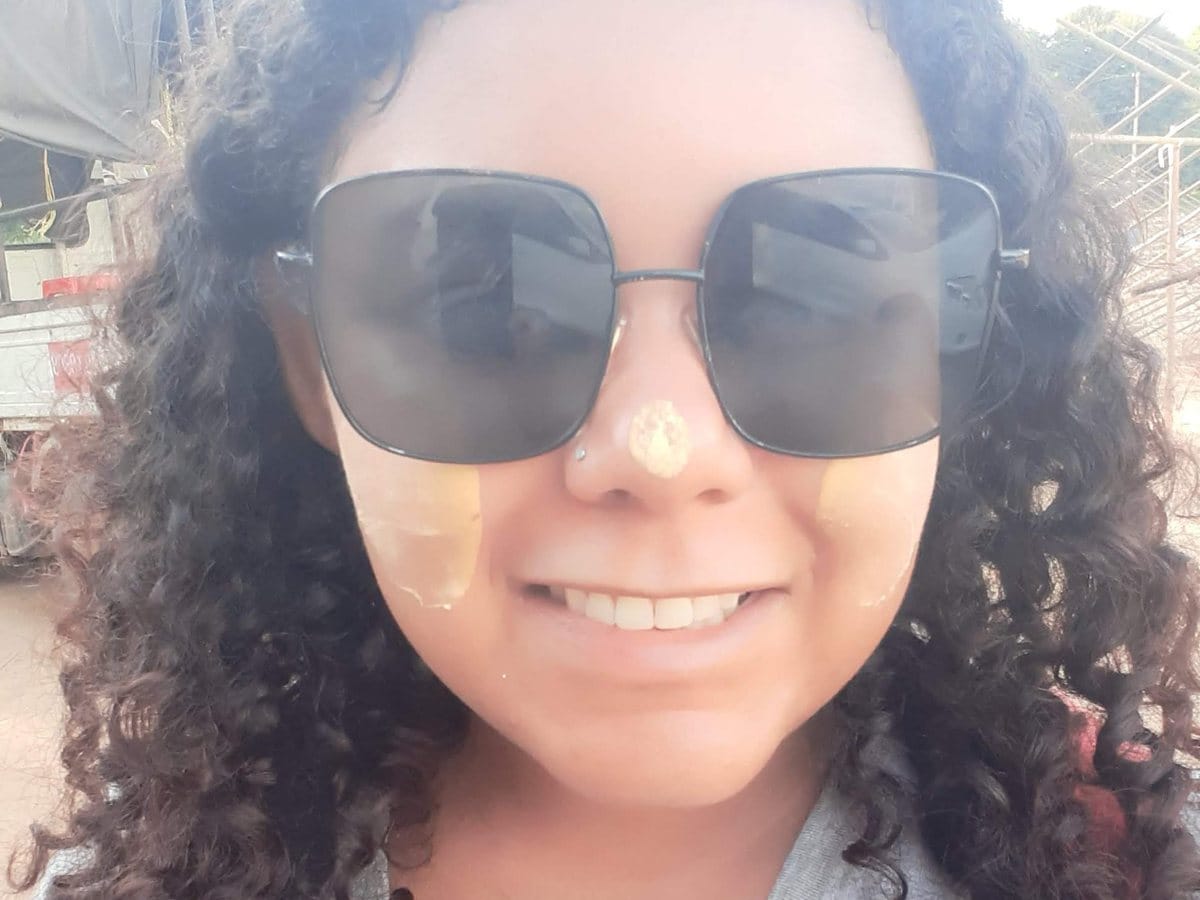
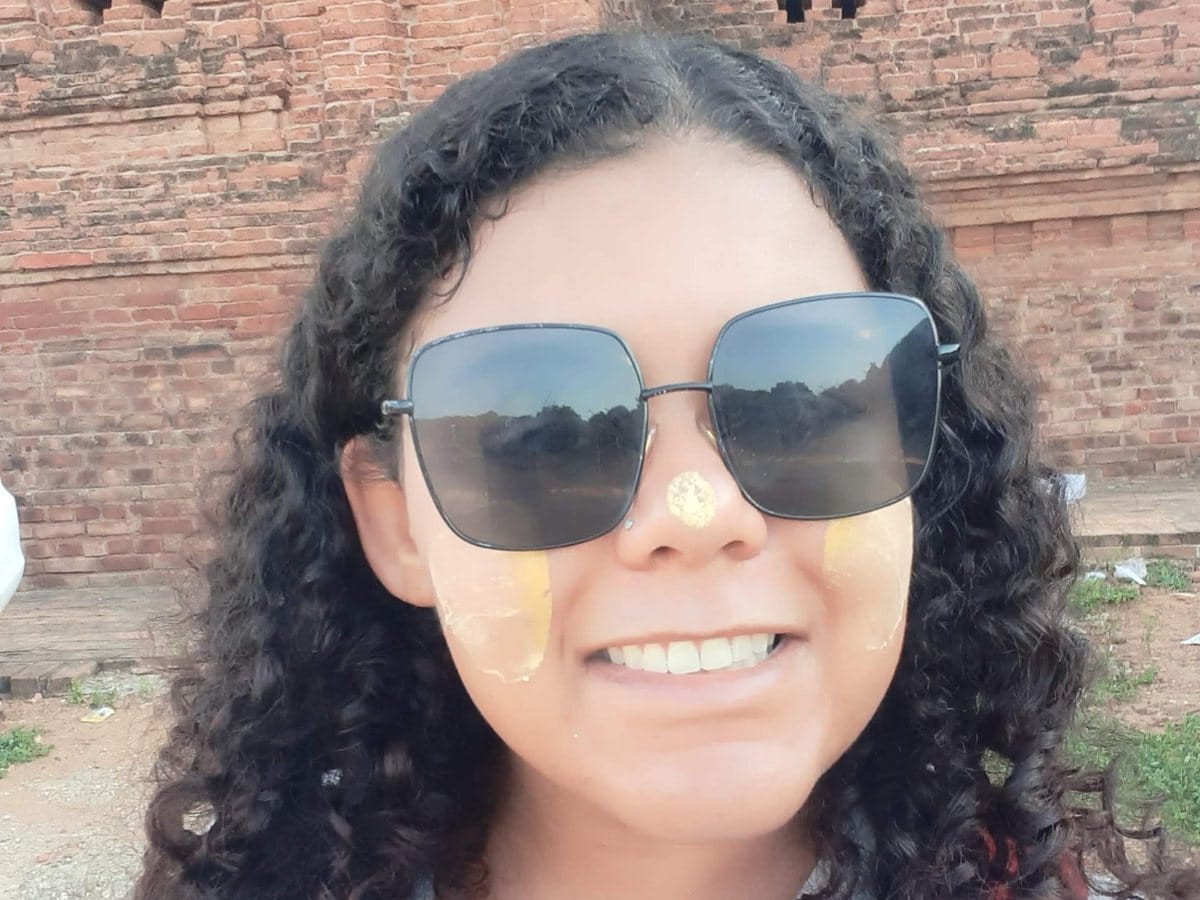
I was mentally reviewing every possible mistake when the two officers looked at each other, smiled, and asked me, "Is that your real hair?"
That was the problem.
My curls had confused immigration.
They looked at my passport photo, looked at my hair again, and kept smiling and talking about it long enough to hold up the immigration line behind me. Eventually they stamped me out of the country.
I still laugh when I think about how quickly my mind went from possible immigration violation to realizing that two women simply wanted to know whether all of that hair actually grew out of my head.
I do not think every comment about a traveler's hair or appearance should automatically be treated as harmless. Context matters. In this case, their expressions and behavior made the interaction feel curious and warm rather than hostile.
If you want the opposite kind of immigration story, my Poipet visa run ended with me leaving Thailand and not being allowed back in through the same land border.
I Was There During Thadingyut, the Festival of Lights
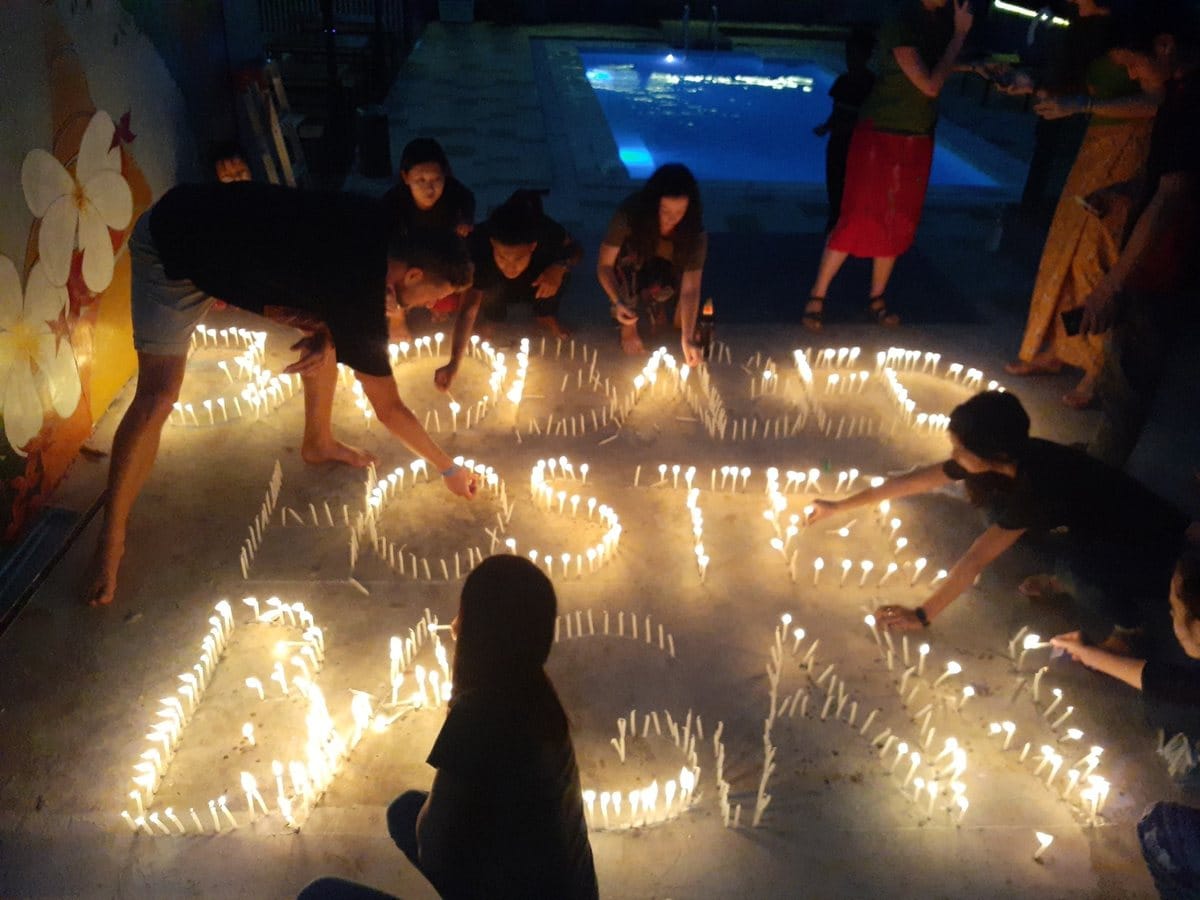
I happened to visit during Thadingyut, Myanmar's Festival of Lights, which made the trip feel even more social than it otherwise might have.
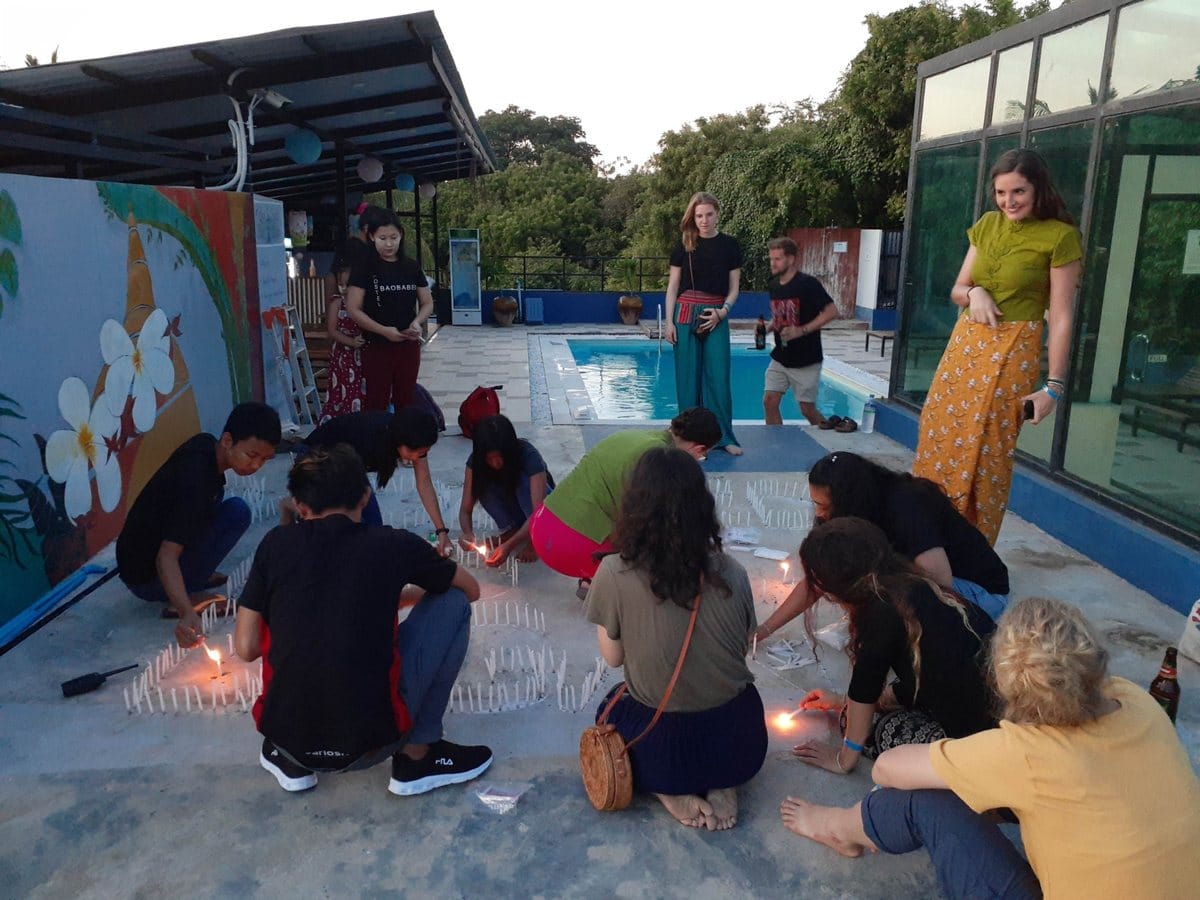
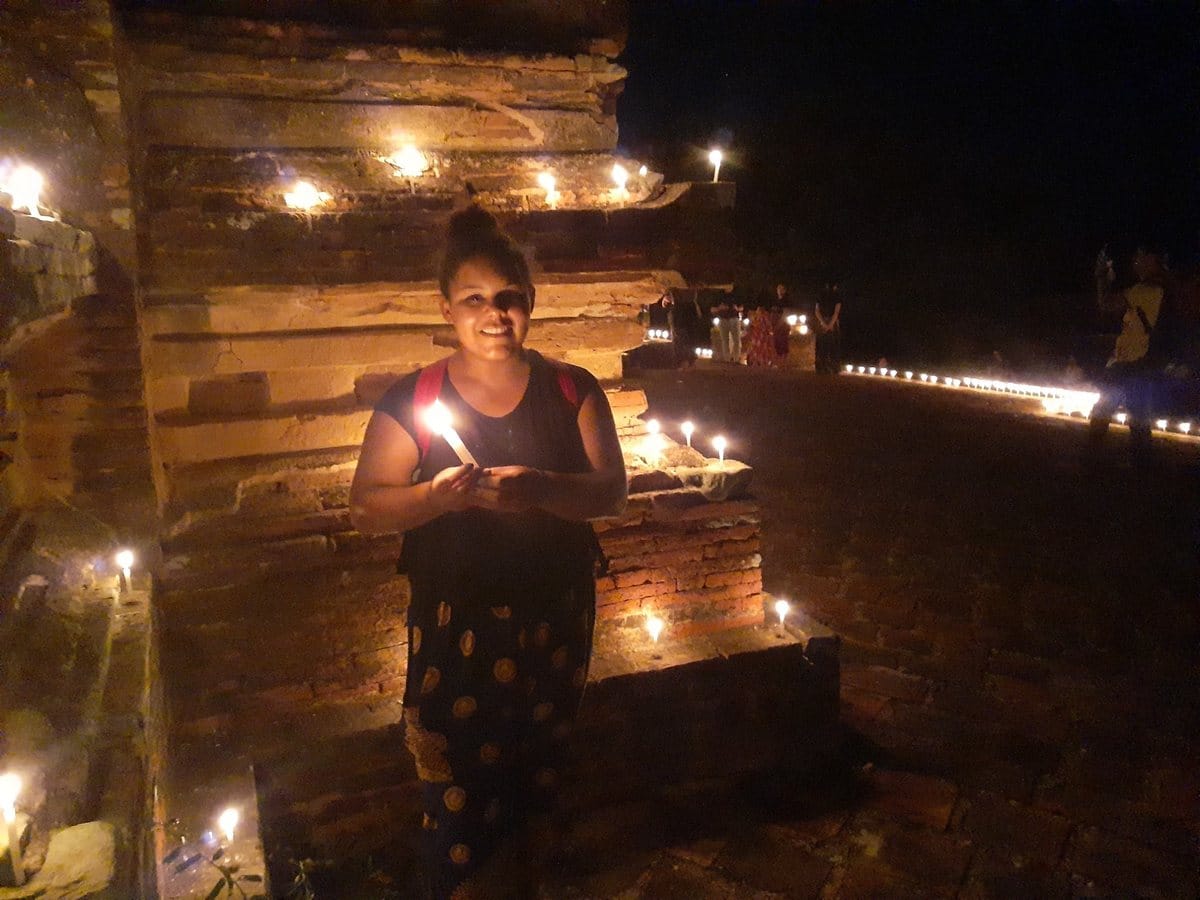
I was staying at a hostel. One evening, people started arranging candles on the ground around the pool. Travelers, staff, and people I had only recently met crouched down together, lit candles, relit the ones that went out, and kept working until the floor was covered in light.
There was nothing polished about it. It was not an excursion I had booked. Nobody was explaining the experience to me through a microphone.
I was simply there while people were celebrating.
The Foreigners I Met Were Happy to Be There Too
I also met a number of foreigners who were living in Myanmar, including Peace Corps volunteers. Every person I spoke with seemed genuinely happy to be there.
I paid attention to that because living somewhere is different from visiting for a few days. Long-term volunteers deal with routines, bureaucracy, misunderstandings, homesickness, and all the boring parts of actually building a life somewhere. The people I met still spoke about Myanmar with affection.
Between the holiday, the hostel environment, and the people I met, I know I experienced one particular version of the country. I do not pretend that my trip represented everyone's life in Myanmar. It was still the version I experienced, and it was a very warm one.
The Part I Hated: Eleven-Hour Bus Rides
I loved Myanmar. I did not love getting around Myanmar.
The long-distance buses were easily my least favorite part of the trip.
On my route, the country felt remote and spread out. The cities I wanted to visit were separated by long stretches of road, and some bus rides took around 11 hours. Five or six hours started to feel almost reasonable after that.
Night buses helped because I could at least try to sleep instead of losing an entire day. Still, there is only so much romance I can attach to spending nearly half a day on a bus.
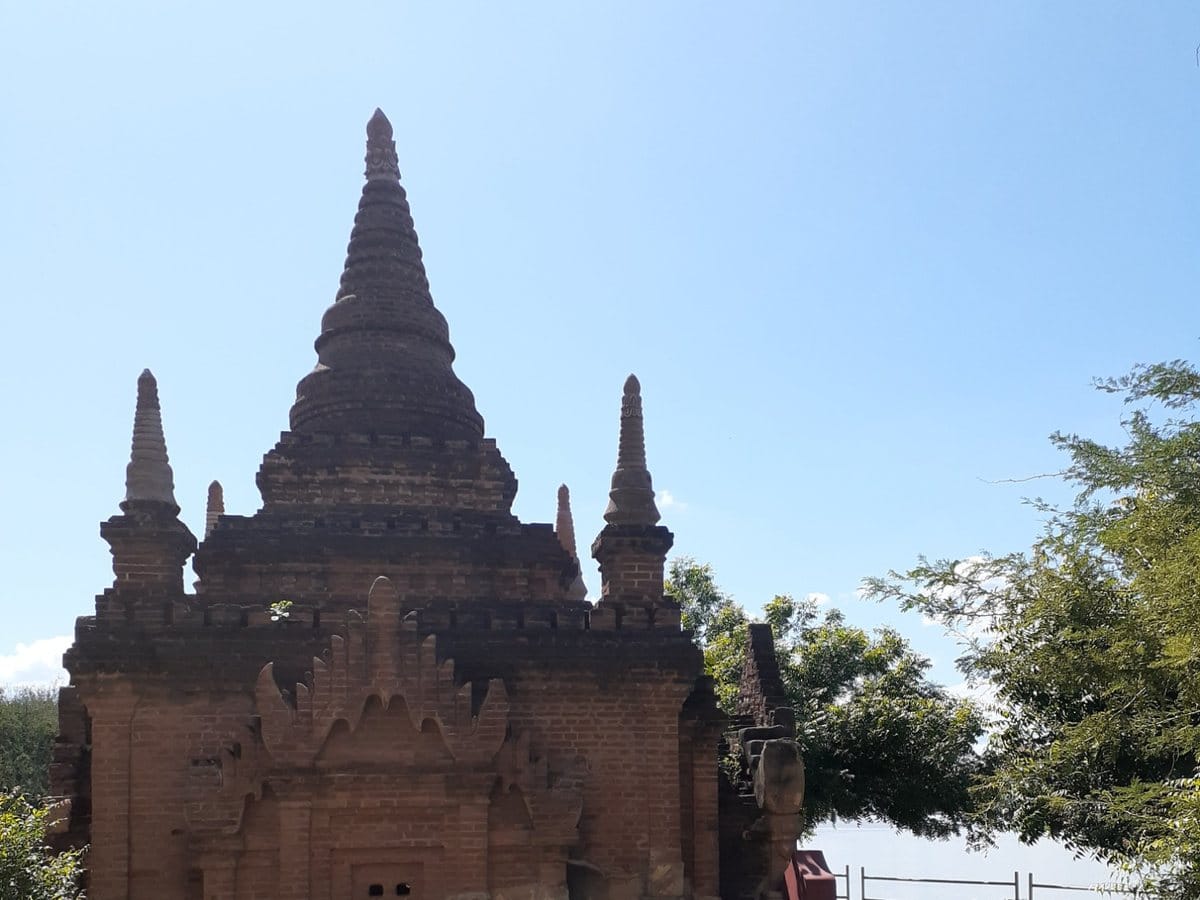
Once I arrived, the slower pace felt completely different. In Bagan, I was happy wandering between temples and taking my time. I just preferred the slow travel after I got off the bus.
The Places I Visited in Myanmar
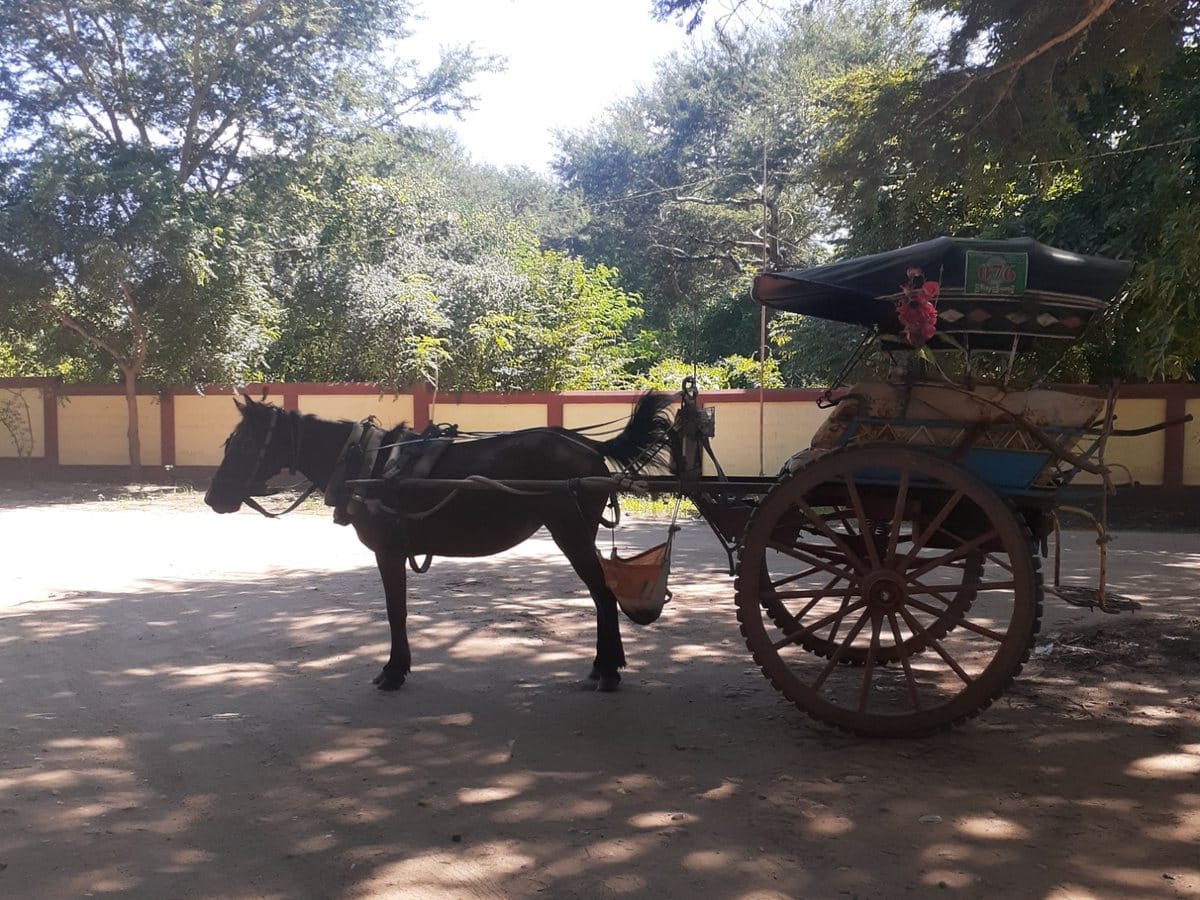
My route included Yangon, Bagan, Inle Lake, and Mandalay.
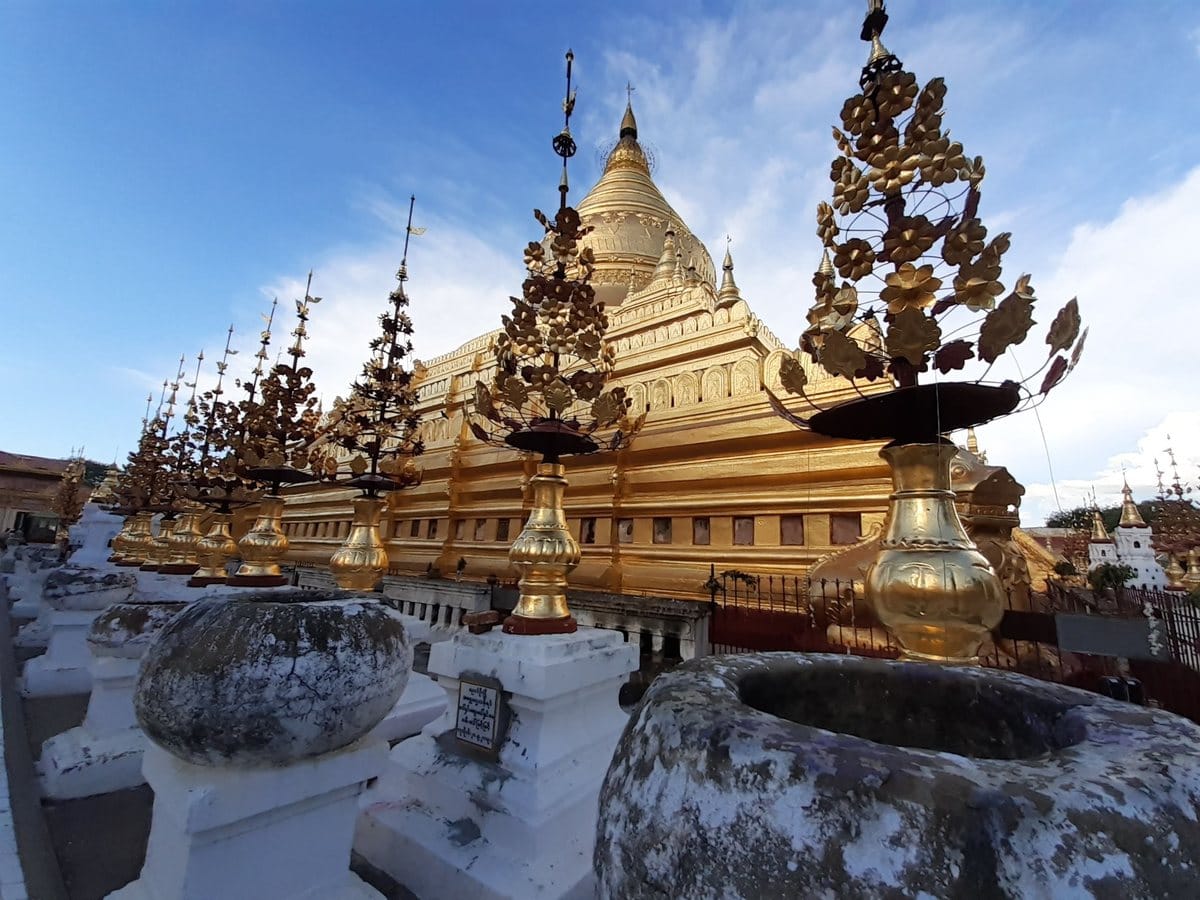
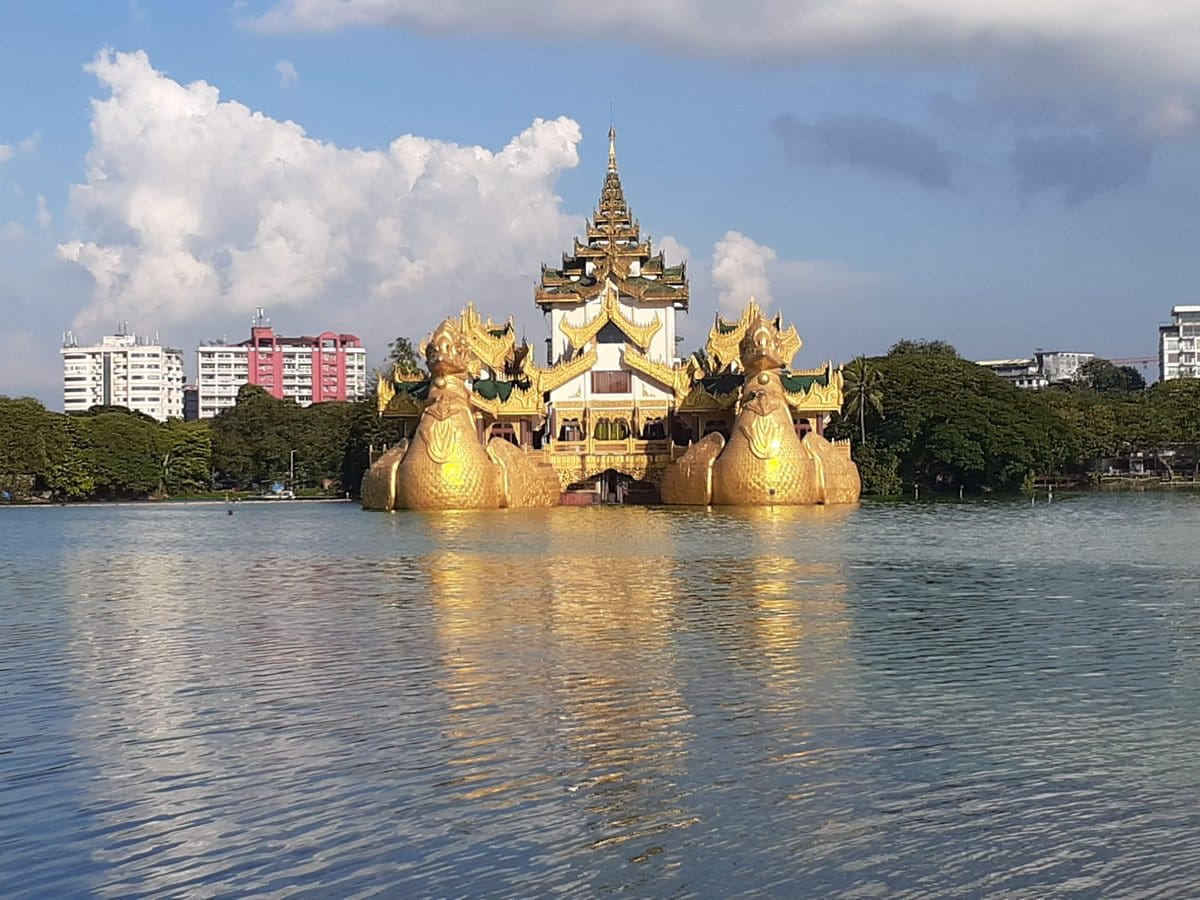
Yangon was my introduction to the country. Bagan gave me the temples and brick landscapes that most people probably picture when they think of Myanmar. Inle Lake and Mandalay added completely different settings to the trip.
I could make a list ranking the four places, but that is not really what I remember.
I remember how spread out everything felt. I remember people. I remember food. I remember walking around with nowhere especially important to be.
Why I Would Not Call Myanmar "Untouched" Now
I understand what travelers usually mean when they call a place "untouched." They normally mean tourism has not changed the place as visibly as it has changed somewhere else.
I used that language too.
I do not think it is the best way to describe a country.
A place is not waiting in a pure state until foreigners discover it. Myanmar had centuries of history, politics, religion, migration, trade, conflict, family life, and change before I arrived.
What I actually liked was much simpler. I did not feel that every part of my experience had been arranged around tourists.
That is different from saying the country was somehow more authentic.
My Myanmar Tourist Visa: What Happened in 2019
As a U.S. passport holder, I applied online for an eVisa before traveling. My approval arrived in under eight hours, which was much faster than I expected, and the tourist visa cost USD 50 at the time.
I printed the approval before I traveled.
I would not use my experience as a current processing estimate. Myanmar's official eVisa system still operates, but current requirements, processing times, entry points, and permitted stays should be checked directly through the official immigration website before making travel plans.
What Has Changed Since My 2019 Trip
A lot.
Myanmar's political and security situation changed dramatically after the military seized power in 2021. As of 2026, the U.S. State Department lists Burma/Myanmar at Level 4: Do Not Travel. The advisory cites armed conflict, unrest, arbitrary enforcement of local laws, poor health infrastructure, landmines and unexploded ordnance, and crime.
That information matters. I would never tell someone to ignore an official travel advisory because I had a good experience years earlier.
I also do not want the politics to become the only thing I say about the country.
The average person I met in Myanmar did not control the decisions of the government. They were working, studying, volunteering, celebrating holidays, raising families, joking with strangers, and living ordinary lives.
I think about that the same way I think about people in many countries whose governments make decisions they did not personally choose. A government's actions matter, but they do not erase the humanity of everyone who happens to live under that government.
The March 2025 Earthquake
Myanmar also experienced a devastating magnitude 7.7 earthquake in March 2025. Thousands of people were killed, and communities across central Myanmar suffered major damage.
Bagan was affected, but the available UNESCO reporting is more nuanced than saying the entire archaeological area was destroyed. UNESCO reported light damage and small cracks in some pagodas and stupas within the World Heritage property at that stage, while continuing to monitor the site and call for further assessment.
The human impact of the earthquake was severe enough without exaggerating what happened to every landmark.
What I Would Tell You About Myanmar Now
If you asked me what I remember most about Myanmar, I would not start with Bagan.
I would start with the people.
After traveling to 42 countries, the people I met there remain some of the kindest I have encountered. They did not simply make me feel welcome. I often felt as though they wanted me to see something and understand something about their country.
That is difficult to explain through a list of attractions.
I remember people asking why I had come. I remember conversations with volunteers who were happy to be living there. I remember the hostel during Thadingyut. I remember the immigration officers laughing about my curls. I remember people seeming genuinely pleased that I wanted to know more about the place they called home.
A country is more than the decisions of its government. The everyday people living underneath the headlines are part of the story too.
I do not want to romanticize Myanmar or minimize the current situation. Both would be dishonest. I can take the travel advisory seriously and still say that the people I met deserve to be remembered as more than a political headline.
I was genuinely sad when it was time to leave for Vietnam. Part of me wanted more time.
I hope I get another chance to return someday under circumstances that are safer for the people who live there and for the travelers who want to understand the country. If that happens, I hope the thing that feels most familiar is not a temple or a bus route.
I hope it is the kindness.
Vietnam, however, became a completely different story. It involved a scam, a moment when I was nearly left stranded in the middle of nowhere at night, and a group of Vietnamese college students who stepped in to help me.
That is a story for another time.
Join the conversation
What place surprised you most?
Tell me about the trip that made you slow down, pay closer attention, or rethink something you used to believe about travel. See the Policies & Disclaimers.