
If you are trying to move abroad without a remote job, you are not out of options.
People build lives overseas through local employment, teaching programs, corporate transfers, working holidays, study, fellowships, skilled-worker routes, family routes, service programs, career breaks, business ownership, and other legal residence pathways.
Remote work is one door. It is not the whole building.
For years, location-independent work felt like a secret club to me. I had been reading travel blogs since around 2012. Somebody was clearly paying for all these people to live in Thailand, Bali, Mexico, and everywhere else I wanted to go.
I just could not figure out who.
“I work in marketing.” Okay. How? Did you study marketing? Did a friend hire you? Where did you apply? Is there a door? Do I knock three times?
Sometimes the answer was even less useful:
“I invested in crypto.” Excellent. I remain unemployed.
The Quick Answer: You Need a Route, Not a Lifestyle Label
Before asking “How do I become a digital nomad?”, ask:
- What gives me the legal right to stay where I want to live?
- How will I support myself once I am there?
Those answers may have absolutely nothing to do with remote work.
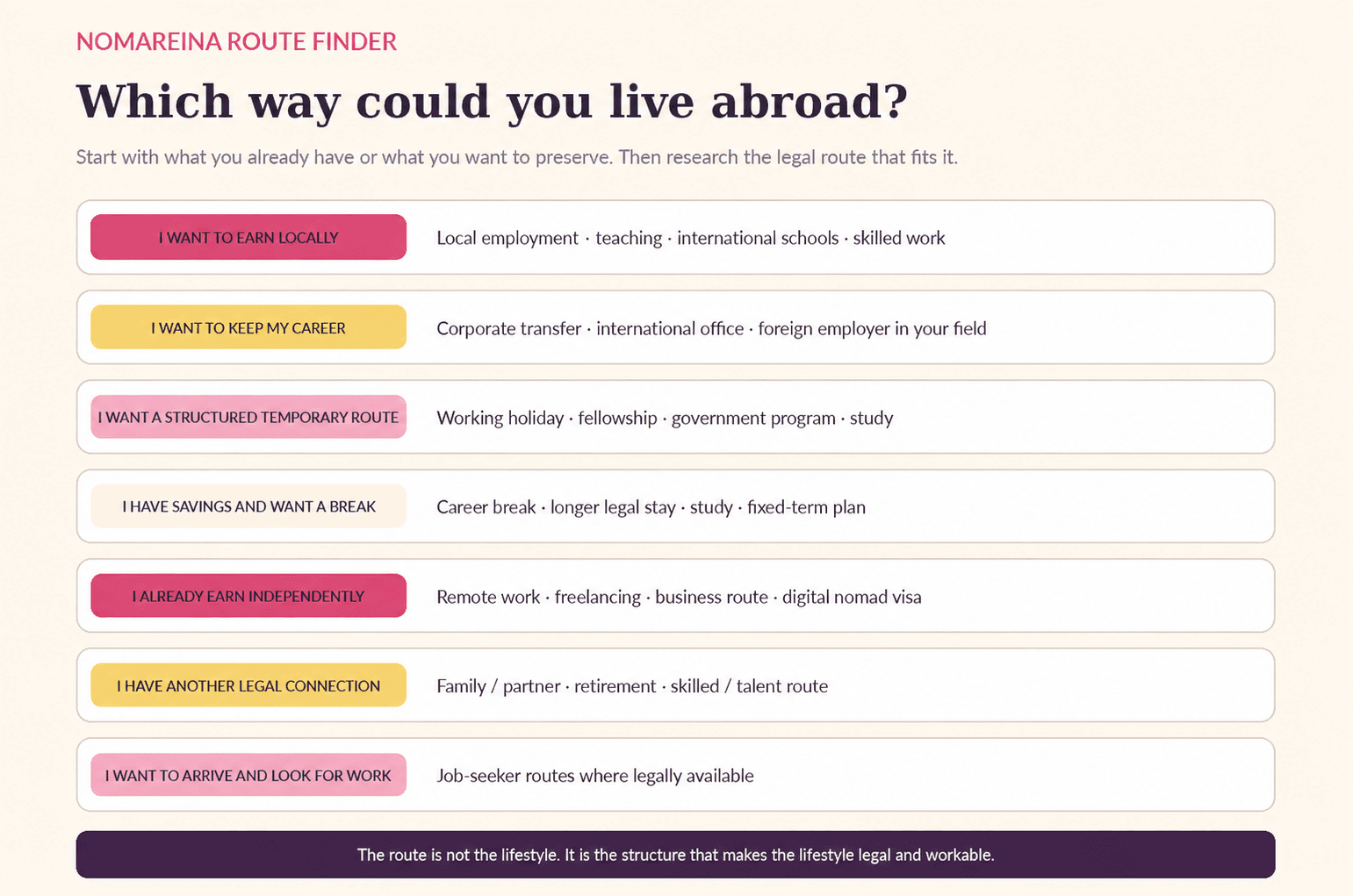
Real Ways to Live Abroad Without a Remote Job
These are starting points for research, not blanket recommendations. Eligibility depends on your nationality, qualifications, finances, age, destination, and the route itself.
| Route | A real place to start researching |
|---|---|
| Teach abroad | Japan’s JET Programme or South Korea’s EPIK program. |
| Working holiday | Australia’s Work and Holiday visa (subclass 462) for eligible passport holders. |
| Look for skilled work abroad | Germany’s Opportunity Card is one route for qualifying applicants. |
| Study internationally | Erasmus Mundus Joint Masters is one structured study route. |
| Structured service abroad | Peace Corps is one option for eligible U.S. citizens. |
| Corporate transfer | Start with your employer’s international offices, internal job board, and mobility team. |
| Career break | Use savings under a legal stay route that does not depend on employment. |
| Family / partner route | Research the residence rights available through your actual family or partnership circumstances. |
Being allowed to enter a country is not automatically the same as being allowed to work there.
“My friend did it and nobody stopped her” is not an immigration category.
What About a Digital-Nomad Visa?
Digital-nomad visas are real, and if you already have remote income, one may be useful.
The important word is already.
A digital-nomad visa does not hand you a laptop, a salary, and a mysterious marketing job at immigration.
It solves a different problem: where qualifying remote workers may legally live while earning income from elsewhere.
The visa is the permission structure. It is not the income structure.
I Moved Abroad With More Nerve Than Information
When I first left the United States, I had a bachelor’s degree, a U.S. passport, about $2,000 in savings, and no beautifully organized international-life strategy.
I did not come from money. I had worked two jobs during university, and after school expenses and ordinary life, $2,000 was what I managed to save.
The original opportunity came through a friend of a friend at university. I heard about someone going to Thailand and basically thought:
Excellent. I will copy that.
My first arrangement paid around 15,000 baht per month and included housing. I later realized I could have found better-paying positions for similar work.
I also ran out of money more than once because I was trying to combine tourist spending with a local salary, which is an excellent strategy if your goal is to become acquainted with the number zero.
Eventually I adapted. I ate locally, bought secondhand clothes, learned what things actually cost when you live somewhere, and later found a regular teaching job on my own.
I go deeper into that route in How Teaching in Thailand Made Travel Possible Without a Remote Job.
Before You Choose a Country, Decide What “Living Abroad” Means to You
“I want to live abroad” sounds like one goal.
It is about twelve goals wearing a trench coat.
- One year overseas and then returning to your current career.
- Permanent residency and a long-term home.
- Six months away without working.
- The same profession abroad through a transfer or international employer.
- One stable foreign base with no desire to drag a suitcase through seventeen countries.
- A career break before returning home.
Those lives need different structures.
Before choosing a country, ask whether you need to preserve a professional license, support children or family, earn U.S.-level income, pay debt, or keep a clear path back into your career.
One friend of mine works roughly half the year in construction because winter limits the work where he lives. He travels during the off-season.
His job is not remote. His calendar gives him mobility.
There Was Never One Way to Do This
Once I lived abroad, I met teachers, hotel managers, NGO workers, spouses, people studying internationally, and people transferred by employers.
I also met foreigners working in ways that were much more casual about work authorization than I would ever recommend.
“I have a job here” and “I am legally allowed to do this job” are not necessarily the same sentence.
Why “Just Get a Remote Job” Is Weak Advice
Remote work can be wonderful. I eventually did it.
But “just get a remote job” skips over a few details.
Like getting the remote job.
- Competition can be high.
- “Remote” can still mean remote inside one country or state.
- Payroll and tax rules may limit international work.
- Data-security or client requirements may limit where you can log in.
- Some careers translate to a laptop much more easily than others.
Software development, writing, and marketing may have obvious remote versions.
Emergency medical care?
Unless somebody invents tele-ambulances, we have a problem.
My Job Did Not Travel. It Put Me Closer to the World.
My teaching job was not location-independent. I had students, a school, an employer, and a calendar.
I could not decide on Tuesday that Bali looked interesting and take Wednesday’s staff meeting from a beach café.
But Thai school calendars gave me long breaks around April and October, plus national holidays.
My travel had to be planned.
But I was already in Asia.
Destinations that once required a long, expensive flight from the southeastern United States became regional trips.
My income was lower than what I might have earned back home, but my geography was doing some of the work.
I did not need a job that traveled with me.
I needed a job that put more of the world within reach.
Every Kind of Freedom Comes With Rules
I had a lot of freedom while teaching. I did not have unlimited freedom.
- If you work for an employer, you answer to the employer.
- If you own a business, you answer to customers.
- If you freelance, you need clients and deadlines.
- If you work remotely while traveling, you still have to work while everybody else is asking if you want to go snorkeling.
Freedom is usually not the absence of responsibility. It is choosing which responsibilities make room for the life you want.
The Cost of Living Abroad Is Not Only Money
The internet is very good at showing the flight and less good at showing the friendship that quietly disappears three years later.
Friends got married. People had children. Friend groups changed. Some friendships survived beautifully. Others did not.
Living abroad also changed how I thought about identity and belonging. I write more about that in Living in Thailand as a Woman of Color.
Living somewhere else can expand your world and create distance from the life you had. Both can be true.
Your Salary Has to Work in More Than One Country
A local salary may work perfectly where you live and still create problems elsewhere.
Eventually I earned around 39,000 baht per month, roughly $1,200 at the time. That supported my life in Thailand.
Then I would visit the United States and the currency conversion would essentially say:
Welcome home. Good luck.
Before accepting a local salary abroad, ask whether it lets you:
- save consistently
- pay debt or obligations back home
- visit family when needed
- maintain a professional license if required
- cover an emergency flight home
- fund the next move if this country is not permanent
Cost of living can vary dramatically inside the same country. My Chiang Mai on a Budget breakdown is one example.
Health coverage needs a plan too. Depending on your route, you may have employer coverage, access to a local system, or need private coverage.
Do not assume insurance designed for a three-week vacation automatically works for a long-term move.
Cheap to You Does Not Mean Cheap to Everyone
Moving somewhere with a lower cost of living can give you breathing room. It did for me.
But foreign income and investment do not exist outside the local economy.
I do not like describing somewhere as “so cheap!” without asking: cheap for whom?
Living Abroad Can Affect Your Career
Before Thailand, I had worked as an A-EMT. That professional license eventually expired while I was abroad.
I had also once imagined a path toward medical school.
A long international detour changes things. Sometimes for the better. Sometimes not.
Teaching showed me that I enjoyed working with children. Living abroad sharpened my patience, cross-cultural communication, adaptability, and ability to work with people who did not share my assumptions.
But I also eventually had to explain a professional path that did not look conventional.
The useful question is not simply “Will I fall behind?” It is: behind in what, and compared with whom?
Then I Actually Became a Digital Nomad
Eventually I got the thing I had once struggled to understand: remote work, freelancing, and location independence.
I love being a digital nomad.
The point is not that remote work is bad. It is that you do not have to wait for it if another legal structure fits your life better.
What the photos leave out
I spent roughly two years backpacking. The freedom was real.
So was the mental administration:
- where to sleep next
- which neighborhood
- what airport
- laundry
- Wi-Fi
- check-in
- checkout
- where after this
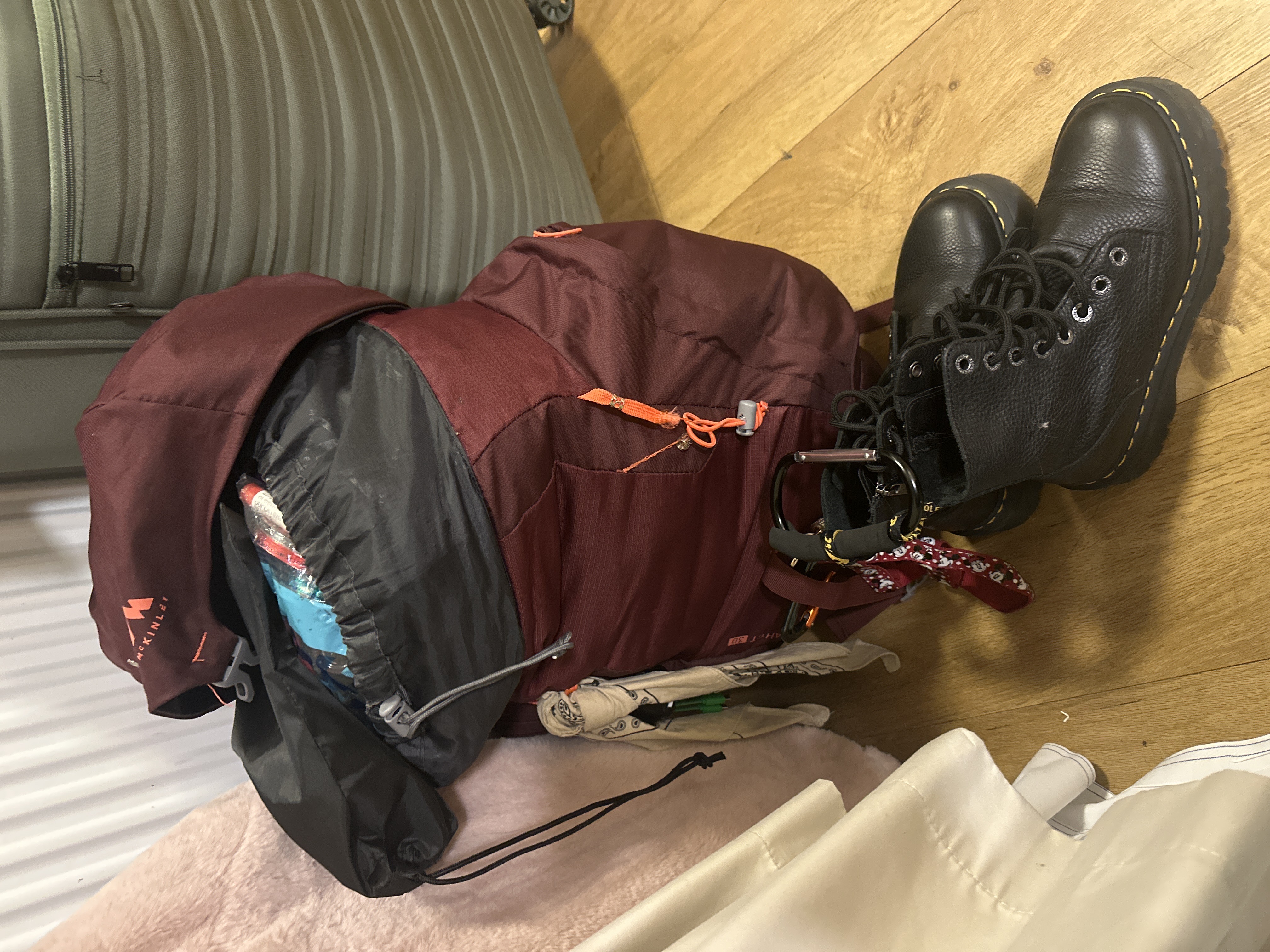
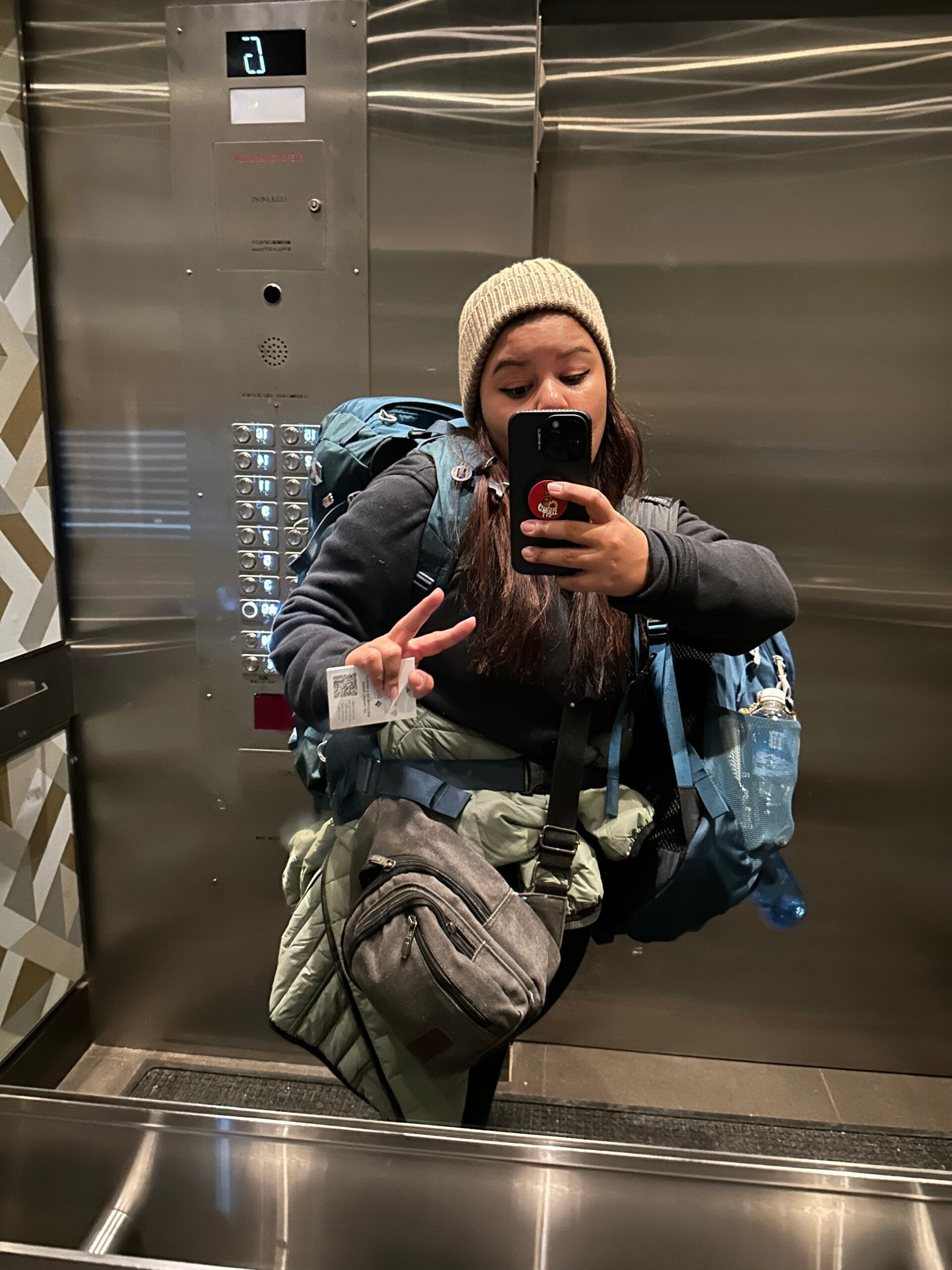
Eventually I wanted my bed.
Not the world’s best bed.
Just a bed I was not checking out of next week.
Which Route Should You Research?
Start with the life you already have.
You do not have to become someone else.
The Boring Legal Part Matters
Please distinguish permission to visit from permission to work.
They are not automatically the same.
- whether your nationality is eligible
- whether the route permits the work you plan to do
- income, savings, or insurance requirements
- how long you can stay and whether renewal is possible
- rules for spouses, partners, or children
- the official government source, not somebody’s five-year-old TikTok
Visa runs are a good example of why this matters. I learned that the stressful way in The Day I Left Thailand and Couldn’t Get Back In.
The Biggest Difference Between Visiting and Living Somewhere Is Tuesday
Visiting gives you highlights.
Living gives you Tuesday: the grocery store, the electricity bill, a colleague irritating you, finding medicine, your usual restaurant, and occasionally having a terrible day somewhere beautiful.
That is when another country stops being an experience you consume and starts becoming a place where your life is happening.
Your Next Three Steps
The point is not “I should move to Thailand and become a teacher.”
Maybe the life I want is possible through a route I have not considered yet.
Things take time. Plans change. There is no perfect five-year plan.
Make the best plan you can, then give yourself permission to change it when you know more.
Moving Abroad Without a Remote Job FAQ
Can I move abroad without a remote job?
Yes. Possible routes can include local employment, teaching, corporate transfers, working holidays, study, skilled-worker programs, service programs, family routes, or a savings-funded career break.
Can I live abroad without having a job first?
Sometimes. Some countries have routes that allow qualifying people to arrive and search for work. Others require a job offer or another qualifying residence basis before you move.
Do I need a digital-nomad visa to live abroad?
No. It is one residence route, generally intended for people who already earn qualifying remote income.
Is teaching abroad still a real route?
Yes. Programs such as JET in Japan and EPIK in South Korea continue to offer structured education routes for eligible applicants.
What jobs can help me live abroad?
Teaching, international education, skilled professions, multinational-company roles, hospitality management, NGO work, and some seasonal or fixed-term jobs are examples.
Is remote work easier than getting a local job abroad?
Not necessarily. They solve different problems. A local job may solve income and work authorization together. A remote job still has to permit international work, and you still need a legal residence route.
Join the conversation
What route could make living abroad possible for you?
Remote work is only one option. What are you considering, or what has made living abroad feel impossible so far? See the Policies & Disclaimers.