
People are very good at turning moving abroad into a spreadsheet.
Rent. Visas. Taxes. Healthcare. Salaries. Weather. Flight prices.
Those things matter. You need a legal way to stay, enough money to support yourself, and a place that works for the practical realities of your life.
But eventually, you have to live there.
You have to figure out who you'll talk to after a terrible day. Whether you'll understand what everyone is laughing about at the table. How friendships actually form. What happens when your communication style collides with local customs. Whether being noticeably foreign will barely cross your mind or become something you think about every day.
Community is not just a nice bonus after you find an apartment. A 2020 integrative review of 30 studies found a general positive relationship between sense of community and well-being among both adults and young people across a range of settings.
That does not mean you need twenty new best friends waiting at the airport.
It does mean that who and what surrounds you matters once a country stops being somewhere you're visiting and becomes the setting for your normal life.
This also is not the usual “12 things to research before moving abroad” list.
NomaReina talks about mobility, but also about community, belonging, and identity. I'm interested in how people get abroad, but I'm just as interested in what happens after they arrive and have to make a life work there.
After years of living abroad and traveling to 42 countries, I still look at rent.
I still look at visas.
I just pay much more attention now to the things that are difficult to price.
How Do You Choose a Country to Move Abroad To?
Start by eliminating places where you cannot realistically live, work, afford healthcare, or support yourself. Then compare the harder-to-measure parts of daily life: language, social rules, community, dating, identity, belonging, and whether you can imagine enjoying an ordinary week there.
The best country is not universally “best.” It is the one whose tradeoffs fit the life you are actually trying to build.
1. How much of the local language do you actually want to learn?
I spoke Thai while I lived in Thailand.
I wasn't fluent, but I understood enough to navigate a fair amount of ordinary life, and that mattered more than I expected.
One of the least dramatic examples was getting my COVID-19 vaccine.
It was a community vaccination event. People were being called by numbers in Thai, and basic questions were being asked in Thai.
Because I understood the numbers and enough of what was happening, I could follow the process without somebody guiding me through every step.
If I hadn't spoken Thai, I probably still would have gotten vaccinated. Someone likely would have helped me.
But needing help with every small interaction adds another layer to your life.
Morocco gave me a funnier example.
People around me spoke Darija constantly. Eventually, I started understanding more than they realized.
One day, people nearby were talking about a football match happening in town. I listened for a while and then asked in English:
“Oh, when is the game?”
Their faces changed immediately.
They had not expected me to understand the conversation.
After that, I noticed people could become a little quieter when speaking Darija around me because they were no longer completely sure what I understood.
Language gives you access to more than transactions.
You can know how to order food, pay rent, get home, and buy groceries while still missing half of what is happening socially around you.
I'm also aware that being a native English speaker gives me an advantage. English functions as an international language in a lot of places, so my experience of “getting by” is not necessarily the experience of someone whose first language has less global reach.
Now, instead of only asking whether English is widely spoken somewhere, I think about a different question:
How much of life here am I comfortable not understanding?
2. Can you live with the local social rules?
Before you live abroad, local customs tend to sound like the fun part.
Take your shoes off before entering.
Learn how people greet one another.
Find out whether you're supposed to tip.
Those are usually the easy customs.
The harder ones are connected to values.
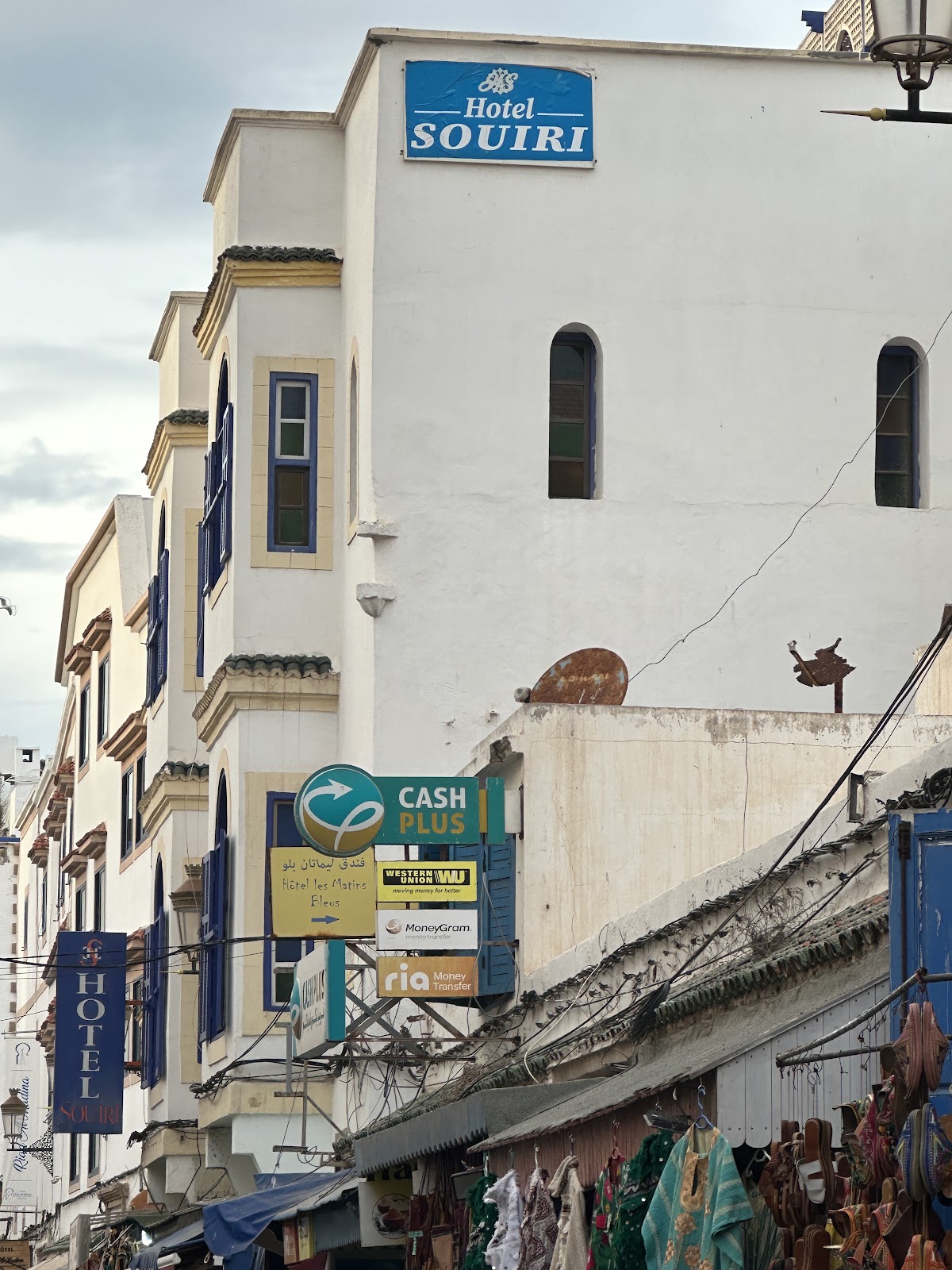
In Morocco, I sometimes struggled with differences around privacy, discretion, and saving face.
There were situations where someone seemed one way with one group of people and noticeably different when the people in the room changed.
From my perspective, that could feel inconsistent.
On an irritated day, I might even have interpreted it as two-facedness.
The people around me did not necessarily understand it that way. Different social settings could call for different ways of communicating, presenting something, or dealing with information.
Same action.
Different interpretation.
That is one of the stranger parts of living somewhere long enough.
Eventually, culture stops being something interesting that other people have.
It starts running directly into whatever you assumed was simply normal.
Then you realize your normal is cultural too.
3. Which cultural differences might actually be good for you?
Thailand challenged me in almost the opposite direction.
There is a relaxed, easygoing quality associated with sabai sabai that I grew to appreciate.
I am naturally more active.
I like plans.
I like solving things.
I generally prefer knowing what we're doing and, ideally, when we're planning to do it.
Thailand was not always interested in cooperating with this personality trait.
There were plenty of times when the more relaxed approach was good for me.
I learned that not every inconvenience required immediate action.
Not every mistake required stress.
Sometimes something could be annoying without becoming an emergency.
There were other times when what everyone else seemed to consider pleasantly laid-back felt suspiciously close to passivity to me.
Both things can be true.
By the time I left Thailand, I was less Type A. I was more comfortable with uncertainty and much better at distinguishing between an actual problem and something that simply wasn't going exactly how I wanted.
I grew from it.
I also got a headache in the process.
That gap between noticing a frustration and understanding the whole context is something I also write about in Teaching in Thailand: 5 Challenges I Faced in a Thai Public School.
That is why I don't find “Do I like this culture?” especially useful.
You probably aren't going to like or dislike an entire culture.
You will appreciate some things.
Struggle with others.
Misunderstand quite a few more.
A better question is whether the differences stretch you in ways you can actually live with.
4. How do people actually build community there?
I've met a lot of people while traveling.
I've made far fewer close friends.
I went to a digital-nomad gathering in Bulgaria once. It was nice. I had a genuinely good conversation and could easily see the value of the event, particularly for networking.
What I did not leave with was the feeling that I had made much progress toward an actual friendship.
Could I imagine eventually working with someone I met there?
Sure.
Was I walking away thinking I had just met the next person I'd call at 3 a.m. if my entire world were falling apart?
Probably not.
Networking and community are not the same thing.
I've had similar experiences with meet-and-greets and short social events.
Hostels occasionally surprise you. I still have two good long-term friends I originally met through hostel bars in 2018 and 2019.
I'm grateful for those friendships.
But two over seven years is not exactly an overwhelming success rate.
My closer friendships abroad have usually grown through repetition:
- cafés I returned to
- friends of friends
- overlapping social circles
- shared interests
- workplaces
- people who expected to be around for roughly the same amount of time
If you like hiking, a place with hiking groups may make sense.
If you genuinely love bars, becoming a regular somewhere can work.
If you hate bars, forcing yourself to go because that's where all the expats supposedly hang out is probably not your best social strategy.
The important part is not the activity.
It's having a reason to see some of the same people again.
This is why I now think about community before moving instead of treating it as something I'll magically figure out once I arrive.
You can live somewhere with beautiful weather, affordable rent, and an easy visa and still feel lonely if the social life available there does not fit how you actually connect with people.
I wrote more about that process in How to Make Friends After Moving Abroad When You Don't Know Anyone.
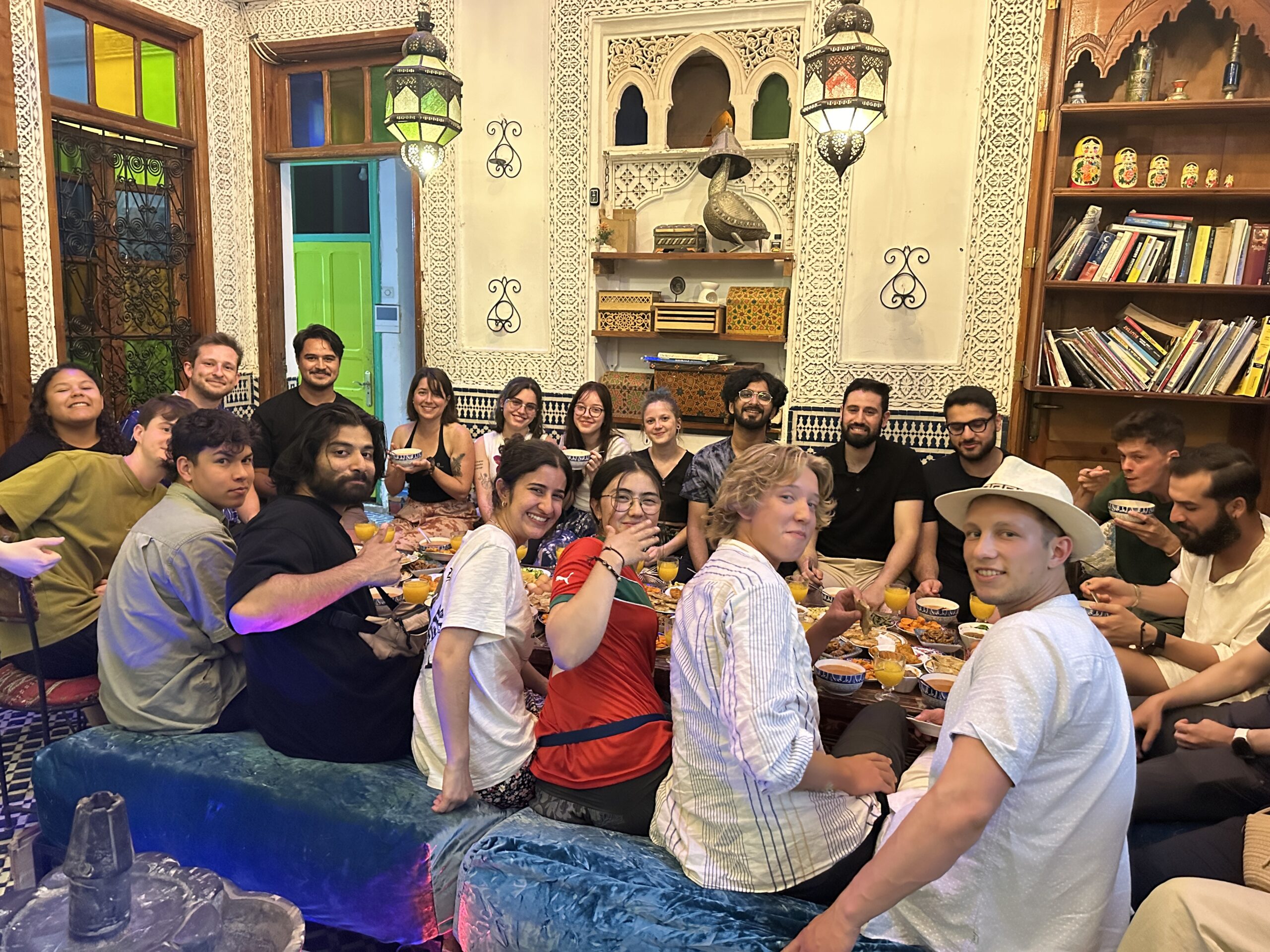
5. Are the people you're meeting actually staying?
A place can have an incredible social scene and still be difficult for building close relationships.
Sometimes everybody is leaving.
I have lived in places where it felt as if I could meet somebody interesting every week and still end up repeatedly starting over because six months later one of us was gone.
I've also spent time in places where people seemed to form their social circles early.
Childhood friends remain friends.
Family stays nearby.
University circles continue into adulthood.
By the time you arrive, people's lives are already full.
I don't think that automatically means people “don't accept outsiders.”
Humans form groups.
There are obvious benefits to having people who have known you for twenty years. If you have that kind of community, of course you're going to invest in it.
But that reality can still be difficult for somebody arriving alone.
It has made me much less interested in whether a destination has “friendly locals.”
Friendly isn't the same as available for friendship.
Someone can be lovely every time you see them without either of you ever moving beyond pleasant conversation.
I'm more interested in whether a place gives me opportunities to become familiar to people.
Can conversations continue instead of restarting?
Will I see the same faces again?
Are people staying long enough for relationships to develop beyond introductions?
A very social place can still be a lonely place if everybody is always on their way somewhere else.
6. What kind of romantic life does the place attract?
I did not think much about this when I was younger.
I dated several expats while living in Thailand, and one issue was simply that our reasons for being there were not always the same.
I had built a life there.
Some of the men I met were more interested in the sabai sabai lifestyle, novelty, adventure, and the experience of living somewhere different.
They were not necessarily looking to settle down.
There is nothing wrong with that.
It becomes relevant when you're looking for something else.
I know multiple foreigners who met long-term partners in Thailand, so it certainly happens.
In my own circles and experience, though, particularly among foreign women dating foreign men, I would not have assumed that finding somebody who wanted to settle down was the most likely outcome.
That is not a statistic about Thailand.
It's what I observed in the version of Thailand I lived in.
It made me pay attention to something I had barely considered before:
Destinations attract lifestyles, and lifestyles attract certain kinds of people.
A place full of people intentionally living temporary lives might be perfect when you want something temporary too.
It can feel very different when you're trying to build something longer-term.
7. What happens when two cultures enter the relationship?
I became much more aware of this during a romantic interaction in Morocco.
We never really crossed the threshold into labels.
Very 2026 of us.
But there was something there, and our cultural differences clashed pretty hard at times.
He sometimes interpreted my behavior as flirtatious when I thought I was simply being friendly.
I sometimes interpreted him as aloof when he believed he was being cautious.
There were multiple occasions when I had to explain why I behaved a certain way.
Sometimes the explanation helped.
Sometimes it still didn't fully click.
My communication style added another layer.
I can be outspoken, direct, firm, and confrontational when I think something needs to be addressed.
That did not always fit comfortably with some of the expectations around gender and communication I encountered in his environment.
I don't think either of us was intentionally trying to misunderstand the other.
We simply did not always attach the same meaning to the same behavior.
Cross-cultural relationships can be fascinating.
They can also involve two people sitting there genuinely wondering:
How could you possibly have interpreted that that way?

8. How will people perceive you before they know you?
One of the stranger things about spending a lot of time abroad is realizing that the identity you carry around in your own head is not necessarily the identity strangers assign to you.
In Thailand, people rarely guessed I was American.
African American was guessed even less.
Filipina came up frequently.
Indian was another common guess.
In southern Thailand, people sometimes assumed I was half Thai.
Those assumptions occasionally changed small parts of my experience.
At markets, I sometimes got better prices because sellers seemed to assume I knew what things were supposed to cost.
People often assumed I understood some Thai, which I did.
And because my appearance did not always immediately communicate “Western tourist,” I could sometimes move through situations without attracting the same attention as somebody who looked much more obviously foreign.
A Caucasian American friend of mine has had almost the reverse experience.
She speaks Thai, married a Thai man, and has lived there for close to a decade.
Yet people can still look at her and assume she's a tourist before she says anything.
She has experienced tourist pricing despite understanding perfectly well what something should cost. Sometimes she has to demonstrate that she knows the language and country before people's first assumption changes.
Neither experience tells us who belongs more.
It shows something I find much more interesting:
How integrated you feel and how integrated you look to somebody else are not necessarily the same thing.
You can know the language, understand the norms, have friends, work there, pay bills there, and still be visually read as somebody who arrived yesterday.
Or you can be brand new and, because of how people categorize your appearance, move through certain situations with less immediate attention.
That may matter a lot to you.
It may barely matter at all.
But if you are choosing somewhere to build a life rather than spend a week, it is worth thinking about how often you are comfortable being misread.
I explore that tension more directly in Living in Thailand as a Woman of Color.

9. Your passport affects more than whether immigration lets you in
My U.S. passport has made international travel easier for me repeatedly.
There are countries where I can enter with comparatively little paperwork while friends with other passports may need bank statements, employment records, accommodation proof, detailed itineraries, and what starts to feel like a 140-page application.
You notice that privilege quickly when you're traveling alongside people who don't have it.
I've also had friends working in the UAE who have talked about European passport holders seeming to receive advantages over Indian or Pakistani colleagues, even when people had similar skills and abilities.
I cannot tell you how representative their experiences were, and I would not turn them into a rule that every European worker has an easier experience than every Indian or Pakistani worker.
Life is not that neat.
It did make me pay more attention to nationality as something that can operate like a social and economic credential, not just a border document.
Nationality also carries stereotypes.
Once people learn I'm American, sometimes American television has already introduced me before I've had the chance.
Whether television did me any favors is another question.
10. What will “different” mean for you in that country?
Race has been one of the more interesting variables in my travels because it does not translate cleanly between countries.
Thailand often read me as some version of Asian.
Italy felt different.
At times, especially before I started dressing differently, I believed people were reading me as North African.
I had several interactions there that I interpreted as hostility connected to how I looked.
I use interpreted deliberately because I cannot tell you what was happening inside a stranger's head.
One incident happened in Rome while I was trying to figure out whether I had the right bus.
I approached a woman and said “excuse me” in Italian.
Before I could really ask the question, she furrowed her eyebrows, said no, and made a forceful shoving-away gesture through the air.
At the Rome airport, I was waiting for a taxi when a driver bypassed me and went to a group of white women standing behind me.
They looked at me.
Nobody said anything.
Could either incident have had another explanation?
Of course.
But those interactions affected how I felt in the place.
That matters when you're thinking about somewhere as a potential home instead of somewhere you're spending four days.
I've also known a Colombian woman who eventually left Spain partly because of racism she felt she experienced there.
Later, in a small Australian town, she described a completely different type of difficulty. She felt many people there simply had very little experience with someone like her.
She changed countries.
Otherness did not necessarily disappear. It changed form.
My experiences in the UK have been different. In the multicultural environments where I've spent time, I've generally felt less preoccupied with how people were categorizing me.
Bosnia was interesting for another reason.
People often seemed unsure what exactly to make of me beyond the fact that I was foreign.
Sometimes:
“We have absolutely no idea what you are” can be surprisingly relaxing.
This is why I do not think asking, “Is this country good for Black travelers?” or “Is this country diverse?” gives you a complete answer.
Those questions can be useful starting points.
But if you're thinking about living somewhere, I would go further.
How is difference understood there?
Which parts of your identity will people notice first?
Will you constantly have to explain yourself?
Will people assume things about your nationality, religion, race, sexuality, gender, or class before they know anything else about you?
And perhaps most importantly:
How much energy are you willing to spend correcting other people's first assumptions?
I also write about how race can become more or less visible depending on the place in Traveling While Biracial.
11. How much do you need to feel like you belong?
Some people are naturally more comfortable operating independently.
Others have spent most of their lives surrounded by nearby family, childhood friends, and communities that have known them forever.
Moving abroad can affect those two people very differently.
If you've already spent much of adulthood building life independently, creating another routine somewhere new may feel familiar.
If you've always had Sunday dinner with your family, three childhood friends ten minutes away, and a social network you barely had to think about maintaining, suddenly losing all of that at once may feel much more intense.
Neither person is doing life better.
And being comfortable alone does not mean community stops mattering.
I have always been fairly independent.
I can travel alone.
I can eat alone.
I can spend a day by myself without assuming something has gone terribly wrong.
But living abroad taught me that independence and belonging are not opposites.
I can be perfectly capable of taking care of myself and still want people who know me.
People who notice when something is off.
People who know what I normally order.
People I don't have to introduce myself to every time I walk into the room.
That is different from simply being surrounded by people.
A crowded expat event can still feel lonely.
A city can be full of friendly strangers while nobody is expecting you anywhere.
Belonging does not necessarily mean having a massive social circle.
Sometimes it's much quieter than that.
It's being expected.
That is one reason I think this question matters so much when choosing where to live.
You are not only choosing a climate, visa, or cost of living.
You are choosing the environment in which you will try to become known.
This is also one of the reasons I think differently about moving abroad in your 30s than I did when I first left home at 23.
12. Can you imagine eventually doing absolutely nothing there?
This might be the best test I've developed.
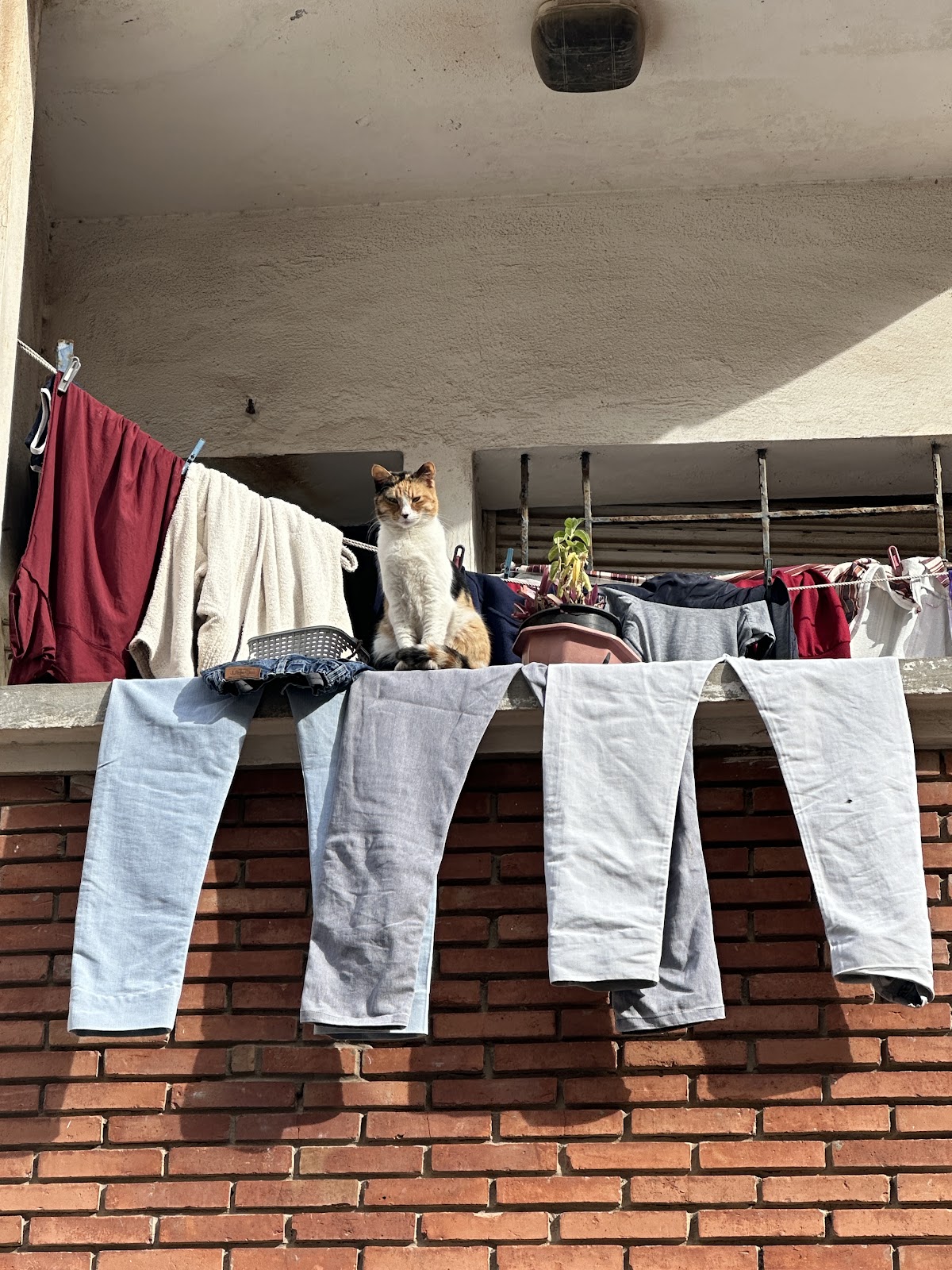
A place starts feeling like home to me when I stop feeling like I need to sightsee.
I'm okay sitting in a café for four hours.
I'm not thinking about which attraction I should squeeze in before sunset.
I'm not worried that I'm wasting a day.
People start knowing me.
I know them.
They aren't passing through.
I know I'll probably see them again.
Eventually, people start to trust me.
That feeling is very different from simply loving a destination.
Travel encourages you to consume novelty constantly.
Another neighborhood.
Another beach.
Another restaurant.
Another museum.
Another viewpoint.
That is fine when you're visiting.
But living somewhere eventually becomes groceries.
Laundry.
Errands.
Work.
Waiting for a package.
Being irritated with your internet company.
Eating at the same place twice in one week because you cannot be bothered to find somewhere new.
Spending Saturday doing absolutely nothing particularly interesting.
And that is the part I would pay attention to before moving.
Can you picture yourself there when nothing exciting is happening?
Do you like the neighborhoods once you leave the major attractions?
Can you imagine having routines instead of an itinerary?
Would a normal week still feel like a life you want?
I don't think ordinary life is when living abroad becomes boring.
I think that's when you finally find out whether you actually like your life there.
A country can be your favorite vacation and still be the wrong home.
The opposite can happen too.
A place may not immediately overwhelm you with spectacular sights, but something about your daily life there starts fitting.
You return to the same café.
Somebody remembers you.
You know which grocery store you prefer.
You stop taking pictures of every street.
You begin making plans three months from now.
That is a completely different relationship with a place.
How Do You Choose the Right Country to Move Abroad To?
Start with the practical requirements.
Figure out:
- where you can legally live
- whether you can support yourself
- whether you can work if you need to
- how healthcare works
- what taxes or financial obligations apply
- what other non-negotiables your life requires
If the legal/work part is the piece you cannot picture yet, start with How to Live Abroad Without Being a Digital Nomad.
Then look beyond them.
| Ask yourself | What you're really testing |
|---|---|
| How much language will I learn? | Access |
| Can I live with the social rules? | Cultural fit |
| Which differences might help me grow? | Adaptability |
| How is community built? | Social life |
| Are people staying? | Stability |
| What dating life does the place attract? | Relationship fit |
| What happens in cross-cultural relationships? | Communication |
| How will people perceive me? | Identity |
| What does my passport mean there? | Nationality |
| What will “different” mean? | Otherness |
| How much belonging do I need? | Support |
| Can I do nothing there? | Ordinary-life fit |
If you're moving with a partner, I would add another question:
Who is this move benefiting more?
Me?
Them?
Both of us?
Moving for another person can be especially difficult when it takes you away from your own support system.
One person can arrive on cloud nine because they finally got the opportunity they've wanted for years.
The other may be rebuilding friendships, routines, work, and community from zero.
They're making the same move geographically.
Emotionally, they may be having completely different experiences.
That does not make moving for love a mistake.
It makes honesty about the tradeoffs useful before the boxes are packed.
And before deciding you want to live somewhere, I would spend some time there without trying very hard to enjoy it.
Go grocery shopping.
Sit in a residential neighborhood.
Return to the same café.
Do something boring.

A country shouldn't have to entertain you constantly for you to want to live there.
Eventually, you're choosing a life.
Not an itinerary.
Your answer might be completely different from mine
Some people move because a job is waiting.
Some move for love.
Some find a visa that fits perfectly.
Some want better weather.
Some simply want to go.
And two people can live on the same street and leave with completely different ideas about the country.
My experiences are one story.
They aren't the definitive guide to what Thailand, Morocco, Italy, Bosnia, the UK, or anywhere else will feel like for you.
That's actually part of the point.
NomaReina is not interested in turning my experience into the ultimate one.
I want to hear from the nurse who figured out how to travel around her shifts.
The person who moved for love and discovered what that actually required.
The immigrant who unexpectedly found community somewhere new.
The person who left a country everybody else seemed to adore.
The traveler whose identity changed how they experienced a place.
If you've lived, worked, or traveled abroad and have a perspective that could add something to that conversation, share your story with NomaReina.
There isn't one universally correct answer to:
Where should I move abroad?
The point is not to find the country everybody else says is best.
It's to understand yourself well enough to recognize the place that works for the life you're actually trying to build.
Choosing a Country to Move Abroad To FAQ
How do I decide what country to move to?
Start with the non-negotiables: legal residence, work rights if needed, affordability, healthcare, and financial sustainability. Then compare language, culture, community, identity, relationships, and what ordinary life would actually feel like.
What should I consider before moving abroad?
Beyond visas and cost of living, think about language, social rules, friendship patterns, dating, nationality, identity, support systems, and whether you could enjoy a normal week there.
Should I visit a country before moving there?
If it is financially and legally realistic, I think it can be very useful. But do not spend the whole visit sightseeing. Try ordinary life too: groceries, residential neighborhoods, repeat cafés, public transportation, and errands.
How do I know if a country is a good fit for me?
Look for a place whose tradeoffs fit your priorities. A country does not need to be perfect. The question is whether the things that are difficult there are things you can realistically live with.
Is cost of living the most important factor when moving abroad?
No. It matters, but cheap rent cannot compensate for a place where you cannot legally stay, support yourself, access healthcare, build relationships, or imagine enjoying ordinary life.
Join the conversation
What made a country work — or not work — for your actual life?
Was it community, language, dating, identity, work, ordinary routines, or something you never thought to research before you moved? See the Policies & Disclaimers.