
Sometimes wanting a different life does not mean your current one is bad.
If you have found yourself wondering, “Why do I want a different life when my life is good?” that may be the wrong question.
You may have outgrown part of it. You may want something it cannot give you. Or you may simply need to find out whether the life you keep imagining actually fits you better.
The important part is figuring out what you actually want to change before assuming you need to change everything.
I learned that twice.
The first time, I was 22 and leaving the United States.
The second time, I was almost 28 and leaving a life in Thailand that looked pretty close to perfect.
The second one was harder to explain.
My life in Thailand was good
By then, I had lived in Thailand for almost five years.
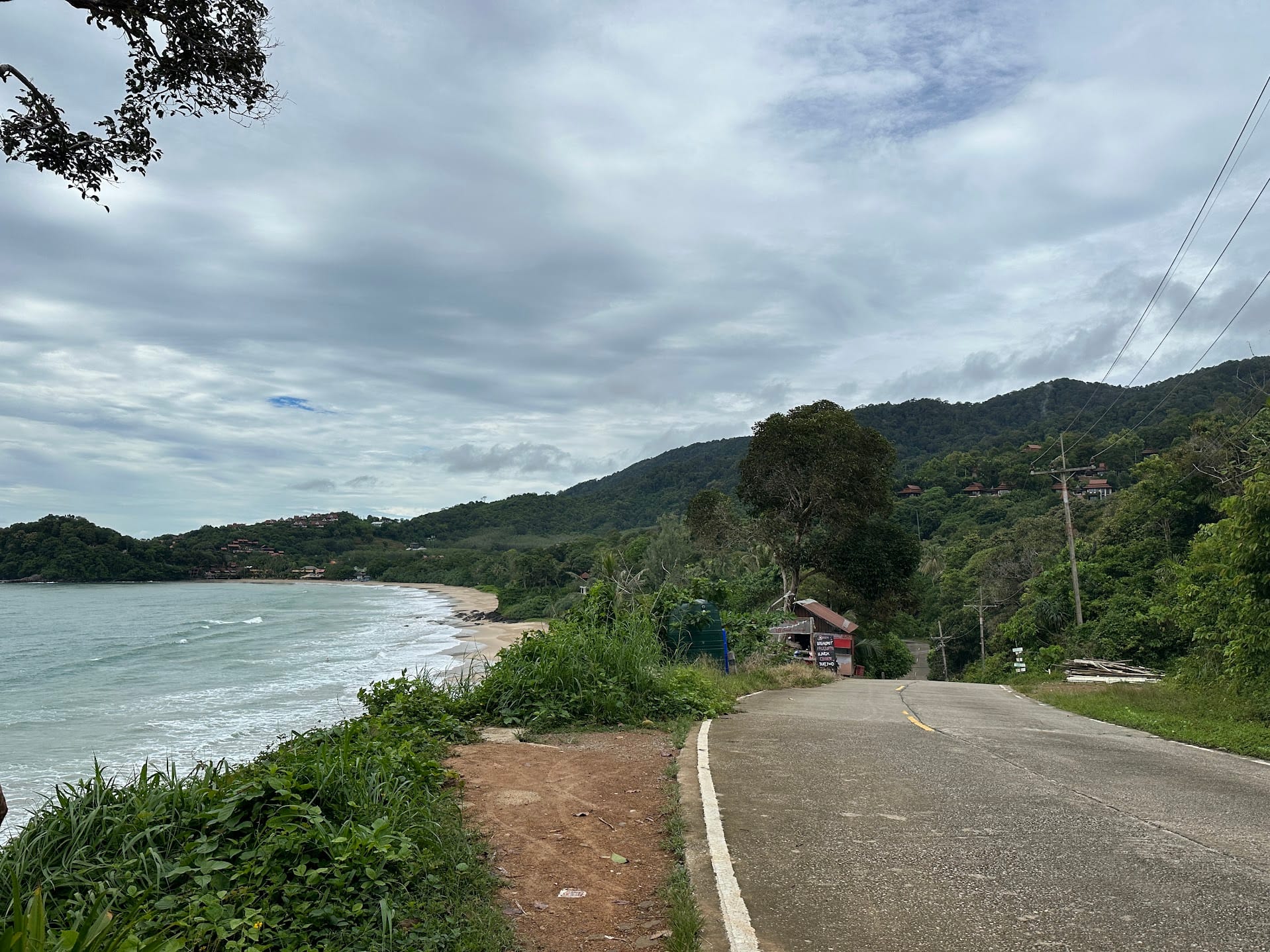
I had a decent job teaching science. I lived in Krabi, one of those places people save photos of when they are planning their dream vacation. I had a motorbike, beaches nearby, familiar restaurants, routines, and a life I knew how to navigate.
A lot of it genuinely was good.
That was what made leaving complicated.
There was no dramatic breaking point. I did not hate Thailand. I was not desperate to escape my job. I was not sitting around miserable every day.
I just kept thinking:
This can't be it.
I had dreams I wasn't working on.
I felt like there was more I was supposed to do with my life.
And eventually, that feeling became harder to ignore than the reasons I had to stay.
Paradise can still be lonely
I loved Krabi in a lot of ways.
But I did not feel like I had found my people there.
I had acquaintances. People I knew. People I could talk to.
What I didn't really have were those close friendships where you automatically know who to call when you're bored, lonely, upset, or just want someone to sit beside you for a few hours.
There were days when I would get on my motorbike and drive around trying to figure out what to do.
I'd been to the beaches. I'd been to the restaurants. I'd done the day trips. I knew the roads.
Sometimes I would pass groups of friends or families together on the beach and feel a little pang of envy.
They had somewhere to be because they had people to be with.
I often had somewhere beautiful to go and nobody I particularly wanted to call.
It was strange to feel lonely somewhere that looked so much like paradise.
Sometimes the pretty pictures really are pretty distractions.
That does not mean the life underneath them is bad.
It just means the photograph cannot tell you whether the life actually fits the person living it.
I had felt that pull before
The first time I remember feeling something similar was in university.
During my freshman year, I spent two weeks in China.
In Guilin, in southern China, I met backpackers for the first time.
I remember being sad that I had to leave.
Not just normal end-of-vacation sad. I remember wishing there were somehow a way for me to stay longer.
I looked at the backpackers around me and thought:
I want to be like them.
At the time, I had no idea what that meant practically.
I did not understand how people funded long trips. I didn't know how people worked abroad or built lives outside the path I understood.
I just knew something about it pulled at me.
Years later, when I moved to Thailand, I wasn't trying to reinvent my entire life.
I thought I was doing something temporary.
I expected to return to the United States.
Then I saw a completely different way of living, and suddenly going home didn't feel right either.
My soul didn't feel right going back yet.
So I stayed.
One year became five.
Then staying stopped feeling right too
This is the part I think gets lost in a lot of conversations about changing your life.
Sometimes you get the thing you wanted and eventually realize you are ready for something else.
That does not make the original decision a mistake.
Thailand changed my life.
It showed me I could build a life somewhere unfamiliar. I could start with very little, figure things out, make terrible decisions, adjust, and eventually create something that felt completely normal.
More importantly, it taught me that I could do it again.
I did not have to stay somewhere forever simply because it had once been exactly where I needed to be.
Toward the end of my time there, that quiet nagging feeling started returning.
Something was missing.
And I started wondering whether I was staying because Thailand still fit me, or because I had become good at living there.
Those aren't the same thing.
Someone I knew died
Around that time, a young woman I knew was killed by a truck.
She had recently gotten a new job at a new school.
She was happy about it. She was excited.
She had plans for the week.
She had plans for the weekend.
She went to work like people do every day, assuming there would be another day after that one.
And then there wasn't.
Her death changed the way I thought about time.
I don't mean that everyone should quit their job tomorrow, buy a plane ticket, and live as though consequences do not exist.
Time being finite is not an excuse to be reckless.
But it did make one thing very difficult for me to ignore:
We make a lot of decisions as though there will always be a better time later.
Next year.
After this job.
After I save more.
After things calm down.
After I feel completely ready.
Sometimes waiting is wise.
Sometimes it is necessary.
And sometimes it is simply easier than admitting that there is something you have wanted for years and you are scared to find out what happens if you actually try it.
I did not want to reach 60 and still be thinking about something I had wanted to do at 28.
So I left.
How do you know when it's time to change your life?
I wish I had a scientific answer for this.
I don't.
For me, there is a difference between wanting something for three bad days and having the same thought quietly return for months or years.
It is almost like a whisper.
You ignore it.
It comes back.
You get busy.
It comes back.
You convince yourself your life is perfectly fine.
It comes back.
Some people will call that intuition. Some will call it restlessness. Some will call it a calling.
The easiest way I know how to describe my own experience is:
Your soul knows.
That probably sounds ridiculous if you have never felt it.
If you have, you probably know exactly what I mean.
But I don't think that feeling is proof that you should immediately blow up your life.
I think it is evidence that there is something worth investigating.
Your soul can get your attention.
Then your brain needs to help with the research.
Do you want a different life, or do you want something in your life to change?
This is the question I would ask much more seriously now than I did at 22.
Because moving countries is a very dramatic solution to problems that sometimes have much smaller answers.
Looking back at Krabi, I can see that some of what I wanted had nothing to do with Thailand.
I didn't need a new country to have someone to call on a bad day. I needed people.
I didn't need a new country to work on the goals I kept putting off. I needed to actually start them.
Your version might look different.
Maybe you don't hate working. You hate that job.
Maybe you don't hate your city. You just have not taken a proper break in six years.
Maybe you don't want to move abroad permanently. You want three months somewhere unfamiliar.
Maybe what you actually want is more freedom, more community, more challenge, more creativity, less work, a different pace, or proof that you are still capable of changing your life.
Those are different needs.
And they lead to very different decisions.
If moving abroad is one of the options you are weighing, I wrote separately about how to decide whether you should move abroad.
Some things are about the place. Some things come with you.
This is the other half of that question, and it is the half people usually skip.
A new country changes your surroundings. It does not automatically change your habits, your fears, or the way you handle being alone.
When I left Thailand, the loneliness did not ease.
I was still searching for my people.
What changed was that I was finally working on other goals at the same time. I had wanted to travel long-term since I was a teenager reading Nomadic Matt in 2009. Meeting actual backpackers in Guilin made that kind of life feel real.
Leaving gave me that.
It did not give me community.
Both things were true.
So before you decide what to change, it helps to ask two questions:
What would actually be different somewhere else?
And what would I still be carrying when I got there?
The answers don't cancel the dream.
They just tell you which parts of it a plane ticket can solve.
At 31, I would still listen to the feeling. I would just research better.
At 22, I was willing to jump and figure out where I landed.
That worked out remarkably well in some ways.
It also meant I accepted opportunities I probably would not accept now.
Today, I would research salaries more carefully.
I would not automatically take the first offer because I was grateful someone offered me something.
I would investigate housing, legal options, work, transportation, community, and what normal life actually looks like.
I would pay far more attention to whether the opportunity was good rather than whether it simply existed.
Experience has not made me less willing to take risks.
It has made me more interested in taking better risks.
Before you move, test the Tuesday
If someone told me today:
"I have a good life, but I cannot stop imagining another one."
I would not immediately tell them to sell everything.
I would tell them to test it.
And if living somewhere else is the life you keep imagining, I would make the test as ordinary as possible.
Take a long break from work if you can.
Go for a month.
Rent an apartment or longer-stay place rather than somewhere designed for a three-night vacation.
Join a language class. An in-person class is ideal because it gives your week structure and puts you around the same people repeatedly. If that is not realistic, regular one-on-one lessons through italki can give you some of that structure before you go and while you are there.
Buy groceries.
Do laundry.
Take public transportation.
Work if your legal situation and job permit it, or build enough structure into your days that you aren't simply on vacation.
Find a coffee shop you return to.
Have boring days.
Have a Tuesday.
Vacation tells you whether you enjoy a place.
Tuesday tells you whether you might enjoy a life there.
And on that Tuesday, ask yourself the question Krabi taught me to ask:
If this were my life, who would I call tonight?
If the answer is nobody yet, that doesn't mean the place is wrong. It means you now know what you would have to build.
That is also why I treat building community after moving abroad as part of the plan, not something to figure out after the boxes are unpacked.
Pay attention to what is left once some of the novelty wears off.
That answer is much more useful than asking whether a destination looked good on Instagram.
If you can't leave for a month, test it smaller
Not everyone can take a month off.
Maybe you have parents who need you. A partner. A dog. A mortgage. A job that does not bend.
If your life already has roots, moving abroad in your 30s brings a different set of tradeoffs than it did at 22.
That doesn't mean you are stuck with only two options: stay forever or disappear.
You can still test the Tuesday in smaller ways:
- Spend a long weekend in one neighborhood and live like you're staying. No sightseeing checklist.
- Take a week or two and build it around a class, a routine, or remote work you are allowed to do there.
- Talk to two or three women who actually live in the place you keep imagining. Ask them what their ordinary weeks look like.
- Look up what a normal month would cost you there, and compare it to your real life, not your vacation budget.
None of these will give you the full answer.
But each one gives you more information than wondering.
Your current life does not have to become the villain
I think this is where people get stuck.
We assume major change needs a dramatic justification.
A terrible boss.
A breakup.
A financial crisis.
Burnout.
Some obvious event that makes leaving understandable to everyone else.
But sometimes nothing is terribly wrong.
Sometimes the life is good.
You are just done with that version of it.
Thailand was not a mistake I needed to correct.
I loved it.
I am still grateful I stayed much longer than I originally planned.
But eventually, loving Thailand and knowing it was time to leave became true at the same time.
Those truths did not cancel each other out.
You don't have to convince yourself that your current life is awful before you are allowed to become curious about another one.
If your life is good but you keep wondering about another one
I think you should find out what that feeling is asking for.
That is different from saying you should automatically leave.
Maybe you test another city for a month and realize you miss home.
Maybe you take a sabbatical and discover that travel was not the thing you actually wanted.
Maybe you change jobs and the desire to move disappears.
Maybe you go somewhere for one month and finally understand why you have been thinking about it for five years.
Any of those answers is useful.
Because there is another kind of discomfort that comes from never testing the question at all.
It is quieter.
It is that thought that returns every few years:
What if I had tried?
For me, that question is harder to live with.
Your life does not have to be terrible before you are allowed to question it.
It can be beautiful.
It can be comfortable.
It can even be the life you once desperately wanted.
And it still might not be where you're supposed to stay.
If that quiet nagging feeling has been following you for years, you do not necessarily need to blow up your life tomorrow.
But I do think you owe yourself the chance to find out what it is trying to tell you.
Join the conversation
Have you ever had a good life that stopped fitting?
What did you change, test, or decide to leave alone? Share the version that actually happened. See the Policies & Disclaimers.