
The first thing I noticed in Chiang Mai was not a temple, a mountain, or even khao soi.
It was the backpacks.
Everywhere I looked, Western and European travelers seemed to be carrying enormous Osprey and North Face packs with seventeen straps, emergency compartments, and enough storage to suggest Everest might be next.
I had a backpack from Tesco in Chaiyaphum.
I had paid around 1,500 baht for it, about US$46, which felt like a major purchase on my salary.
Suddenly I was surrounded by people who looked like real backpackers.
I was also one of the few travelers of color I could see.
When you are already wondering whether you belong in a space, noticing that almost nobody around you looks like you can make that feeling louder.
Add the expensive-looking gear and the fact that even people calling themselves budget backpackers seemed to have considerably more money than I did, and I started wondering whether I had somehow missed the entry requirements for being a real backpacker.
I felt like an impostor.
The joke is that the Tesco backpack lasted about five years.
At 23, though, I knew none of that.
I had made my way north to Chiang Mai for three nights to celebrate my first birthday abroad, had roughly $150 to work with, spoke approximately zero Thai, and wanted everything.
My budget did not.
That first trip was one version of Chiang Mai.
I later returned with more money, more experience, and considerably less willingness to carry all my belongings uphill just to avoid paying for transportation.
Chiang Mai Budget: The Quick Answer
- Very lean: about ฿800–1,200 per person per day.
- Comfortable without calculating everything: about ฿2,000–3,500 per person per day.
- More room to say yes: about ฿4,000–6,000+ per person per day.
- Where I'd still save: local food, walking the Old City, markets, temples, and simple transportation.
- Where I'd spend now: time, safety, location, transportation, and the one experience I actually came for.
These are planning ranges, not fixed market rates. Accommodation and activity prices can move with season, festivals, neighborhood, and booking timing.
I Was Traveling on 15 Bills a Month
At the time, I was teaching in Chaiyaphum and earning 15,000 baht a month, roughly US$460.
My housing was provided, but food, transportation, toiletries, travel, and everything else came from those 15,000 baht.
A friend who had also volunteered in Thailand once described our salaries perfectly.
We were together on Koh Phangan for New Year's Eve when she told me:
“Be careful. We only get 15 of those.”
She meant fifteen 1,000-baht bills.
Suddenly spending 1,000 baht was not just “1,000 baht.”
It was one-fifteenth of the money I got for the entire month.
Many foreign teachers I knew earned substantially more than I did.
My income was much closer to what local teachers around me were earning.
I do not tell that story because 15,000 baht is impossible to live on in Thailand.
It is not.
Many Thai people do it.
Years later, during COVID, I had periods when I lived on roughly that amount while also paying my own rent and utilities.
The difference was knowledge.
New-in-Thailand me did not yet know which shops were cheaper, what transportation should cost, where locals bought everyday things, or when convenience was quietly eating twice as much of my budget as it needed to.
That gap between “this place is cheap” and actually knowing how everyday life works exists everywhere.
I Apparently Considered Taxis a Character Flaw
I found the cheapest hostel I could and, against all odds, it turned out to be nice.
Then I arrived in Chiang Mai and did not go there.
Going to the hostel first meant spending more money getting back toward the places I wanted to see.
Twenty-three-year-old me looked at that perfectly reasonable plan and thought:
Absolutely not.
So I kept the backpack, in Thailand, in the heat, and started walking uphill.
There is now a version of me who understands that a few dollars can be an excellent price for not carrying your belongings around a mountain.
She had not been invented yet.
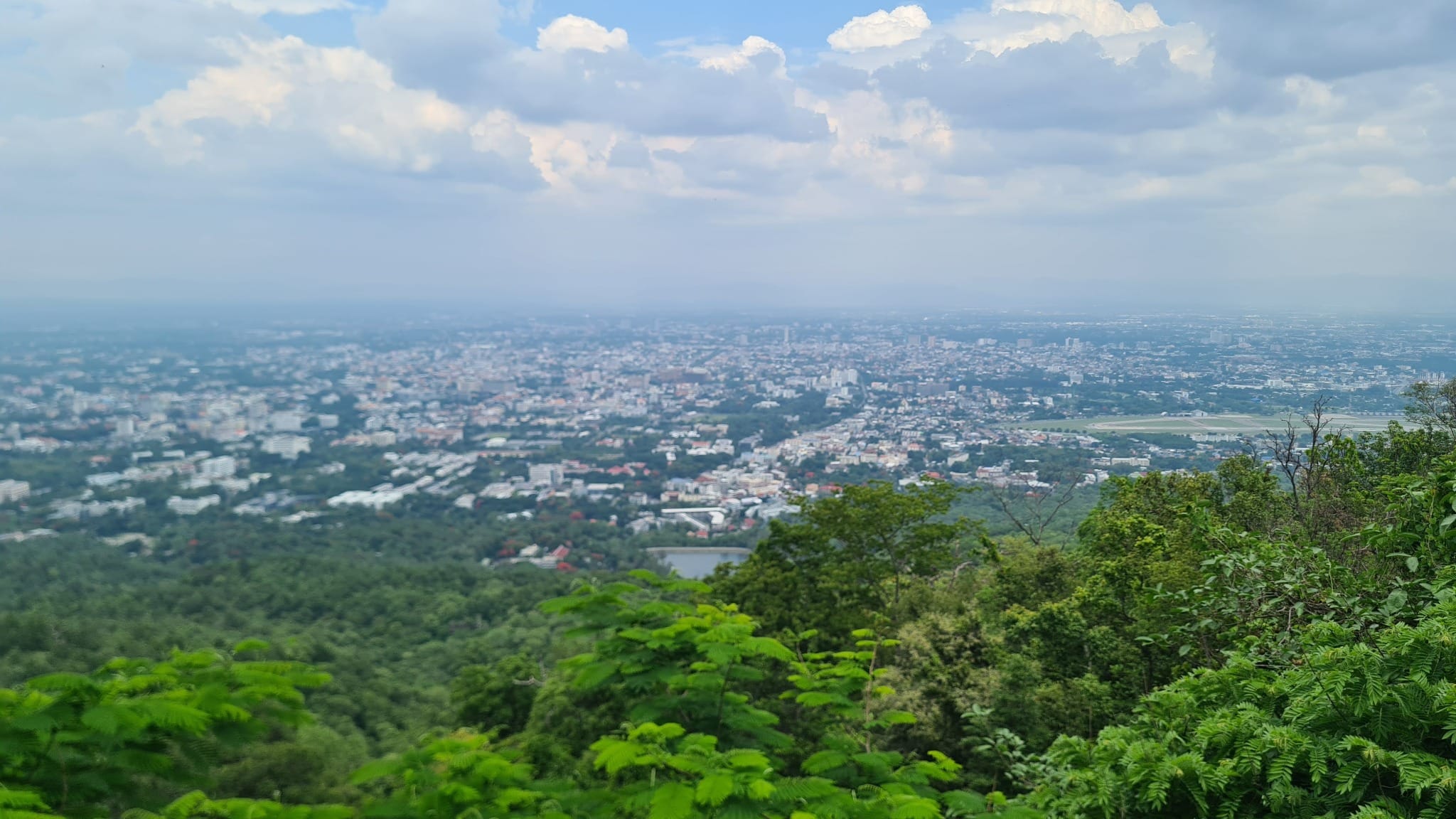
Huay Kaew appealed to me because I could see some nature without paying for a big excursion outside the city.
Then I continued toward Wang Bua Ban because once I started walking somewhere, apparently completing the mission became a matter of principle.
Motorbikes passed. Sweat poured down my face. People looked at me as though I had misunderstood the purpose of roads.
I was having a great time.
And that part matters.
I do not look back and think, Poor girl. She was suffering because she could not afford a taxi.
I wanted to get there. I was excited. The heat and hills were part of the adventure.
But present-day me needs to add something that 2018 me actually wrote in the original article:
The road toward Wang Bua Ban was steep, curvy, and had very little sidewalk.
I enjoyed the walk.
I would not recommend recreating that exact transportation decision now.
Then I Found the Thing I Would Still Spend Money On: Khao Soi
I had been living in Isan, where sticky rice, larb, grilled meats, and northeastern flavors were much more familiar to me.
Chiang Mai felt like someone had quietly changed the menu on the entire country.
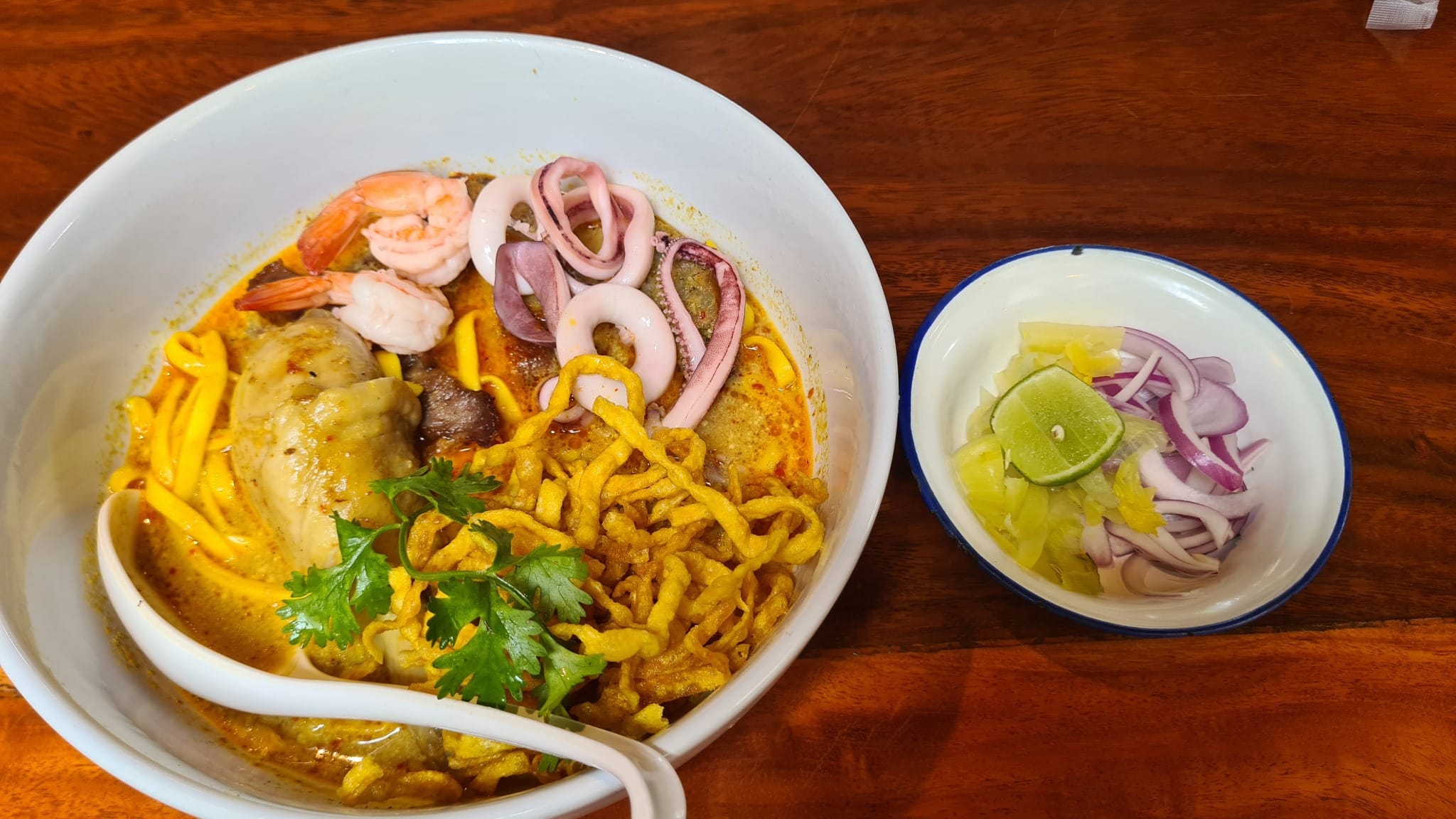
Then I ate khao soi.
It is still my favorite Thai dish.
Not my favorite northern Thai dish.
My favorite Thai dish.
On that early trip, one bowl cost around 45 baht.
Another restaurant version was around 150 baht.
The 150-baht bowl felt reckless.
I normally ate for around 50 to 70 baht, so spending more than twice that required an internal budget meeting.
But it was my birthday.
I was not going to sit in Chiang Mai guarding every baht like a dragon protecting its final gold coin.
Spend carefully enough that I can still spend on what matters to me.
Years later, with a larger budget, that principle still makes more sense to me than simply trying to travel as cheaply as possible.
How Much Should You Budget for Chiang Mai in 2026?
I do not think there is one useful answer to “Is Chiang Mai cheap?”
Cheap compared with what? Cheap for whom? And what kind of trip are you trying to have?
| If this is your Chiang Mai | Rough daily budget | What I would prioritize |
|---|---|---|
| I just need to get there | ฿800–1,200 | Hostel or simple room, local food, walking, markets, temples, inexpensive shared transport. |
| I want comfort without calculating everything | ฿2,000–3,500 | Private room, local meals plus cafés or restaurants, Grab or songthaew when useful, a massage or one paid experience. |
| I want room to say yes | ฿4,000–6,000+ | Better accommodation, convenient transportation, classes, spas or day trips, nicer meals, and fewer decisions based purely on price. |
Per person, per day. These are my planning ranges, not fixed market rates.
They exclude travel to Chiang Mai and expensive specialty tours.
I have experienced Chiang Mai closer to multiple ends of that spectrum than I expected when I first arrived.
The cheapest version was not the most authentic.
The more expensive version was not automatically more memorable.
Money mostly changed how many things I could say yes to and how much inconvenience I was willing to tolerate.
Where I Would Save in Chiang Mai
After living in Thailand and returning north with different budgets, there are still several things I would happily keep cheap.
Walk the Old City
Chiang Mai's Old City is compact enough that major temples, restaurants, cafés, guesthouses, and markets sit close enough together for walking to be genuinely useful.
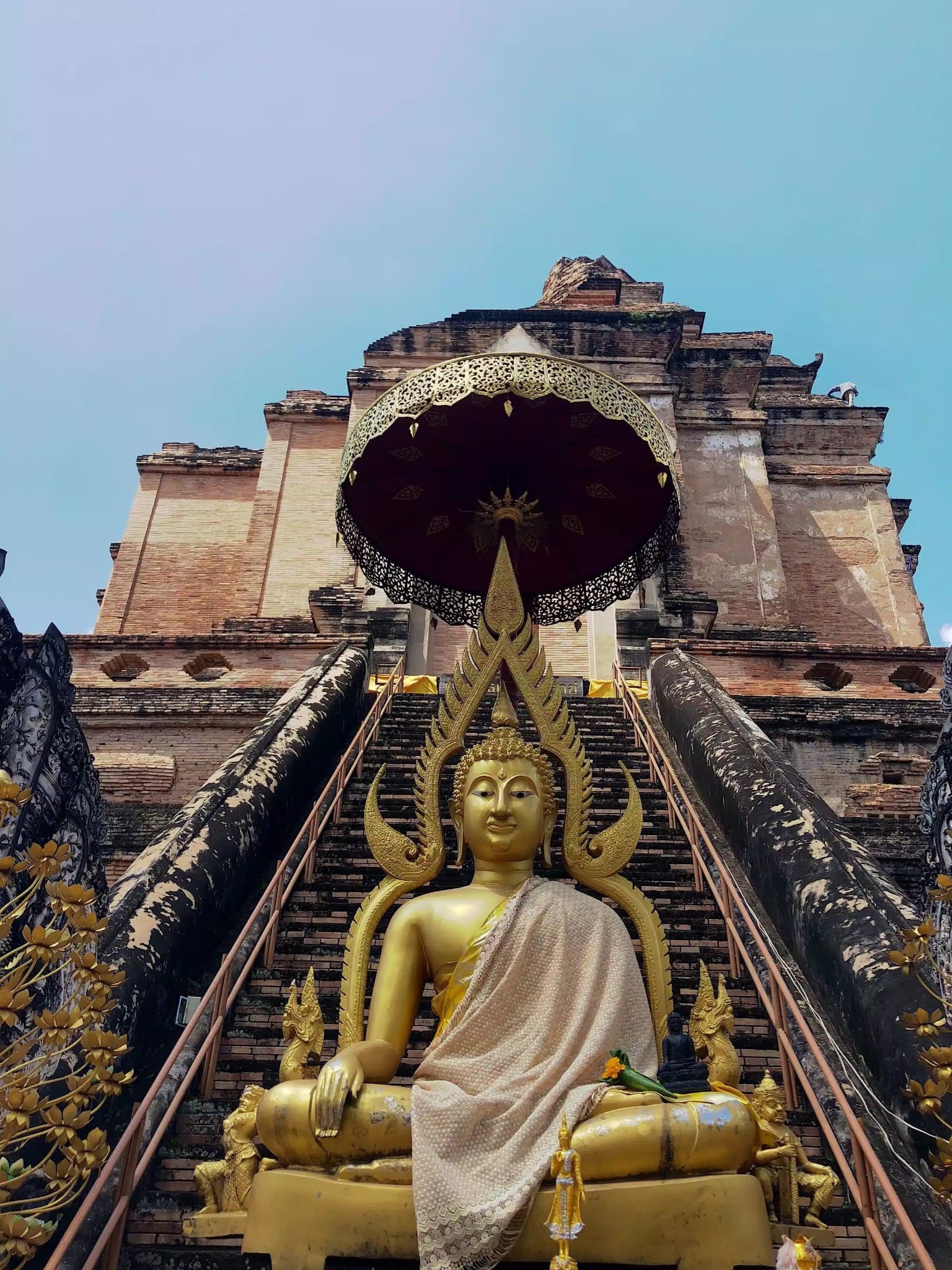
On one of my early trips, I walked between Wat Chedi Luang, Wat Phra Singh, and Wat Chiang Man.
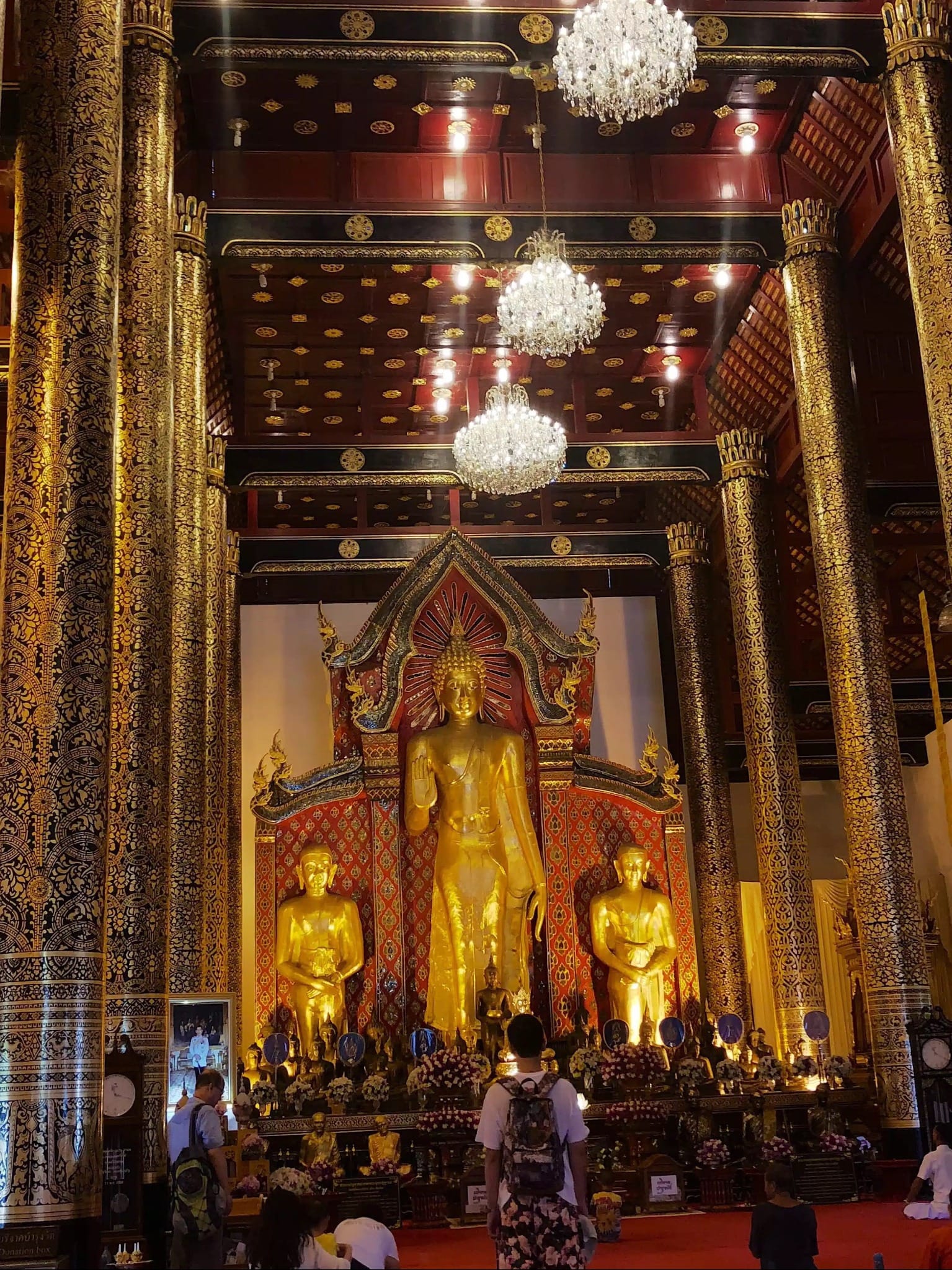
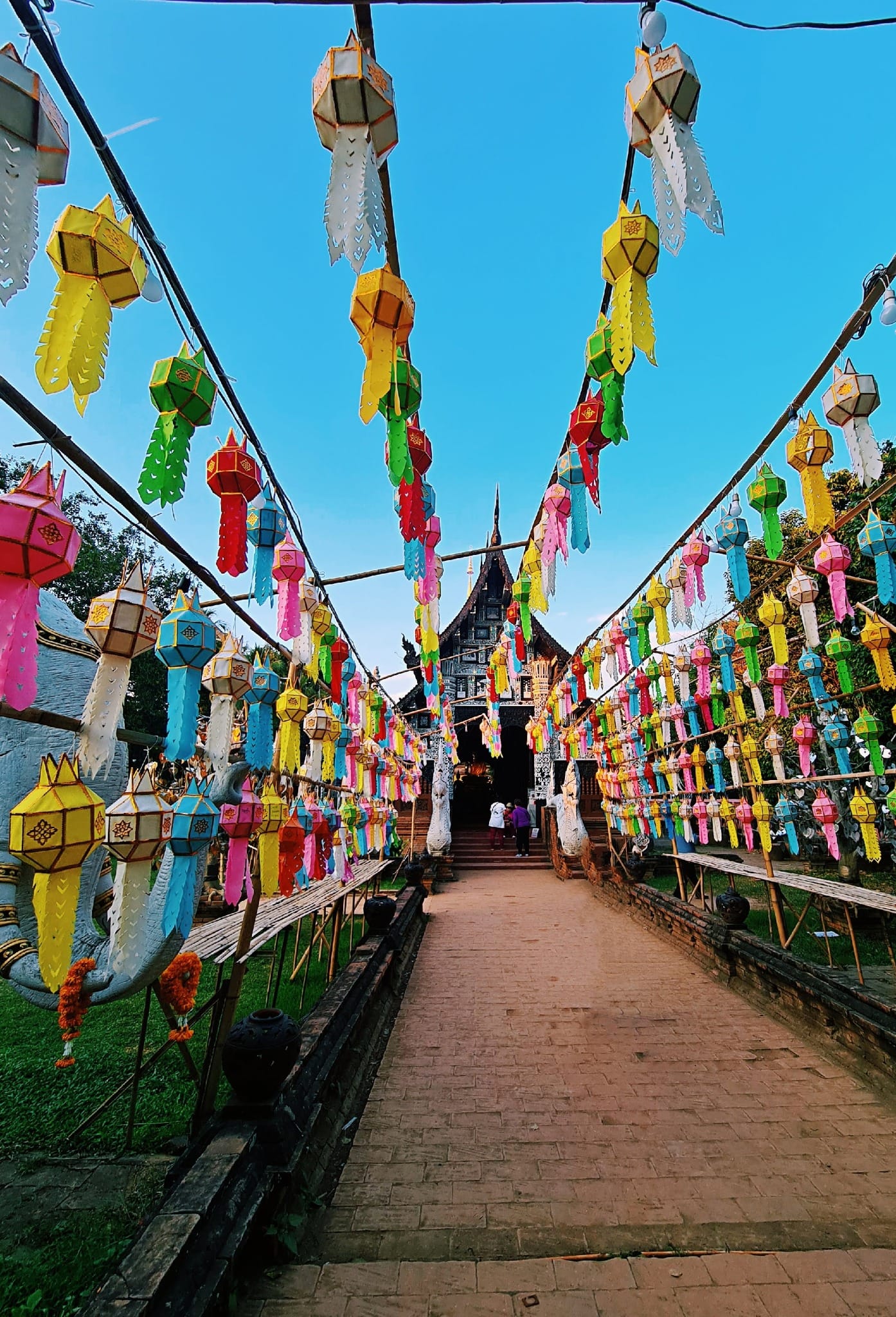
Shoes off. Dress appropriately. Pay attention to where you are standing and what the people around you are doing.
After years in Thailand, taking my shoes off became so automatic that tourists forgetting theirs started activating an internal Thai auntie I had not realized I possessed.
Shoes. Off.
Mostly said internally.
Mostly.
Eat local food without assuming expensive means better
Chiang Mai is still one of those places where inexpensive local food can be genuinely excellent.
You can absolutely spend more.
Sometimes you should.
But paying four times as much does not automatically produce four times the bowl.
Use cheap shared transportation when it makes sense
Red songthaews remain one of Chiang Mai's inexpensive ways to move around central areas, although longer destinations, private use, and tourist-oriented routes cost more.
You do not need a private car every time you move.
You also do not need to prove anything by walking several kilometers carrying your luggage.
Let some of the day be unplanned
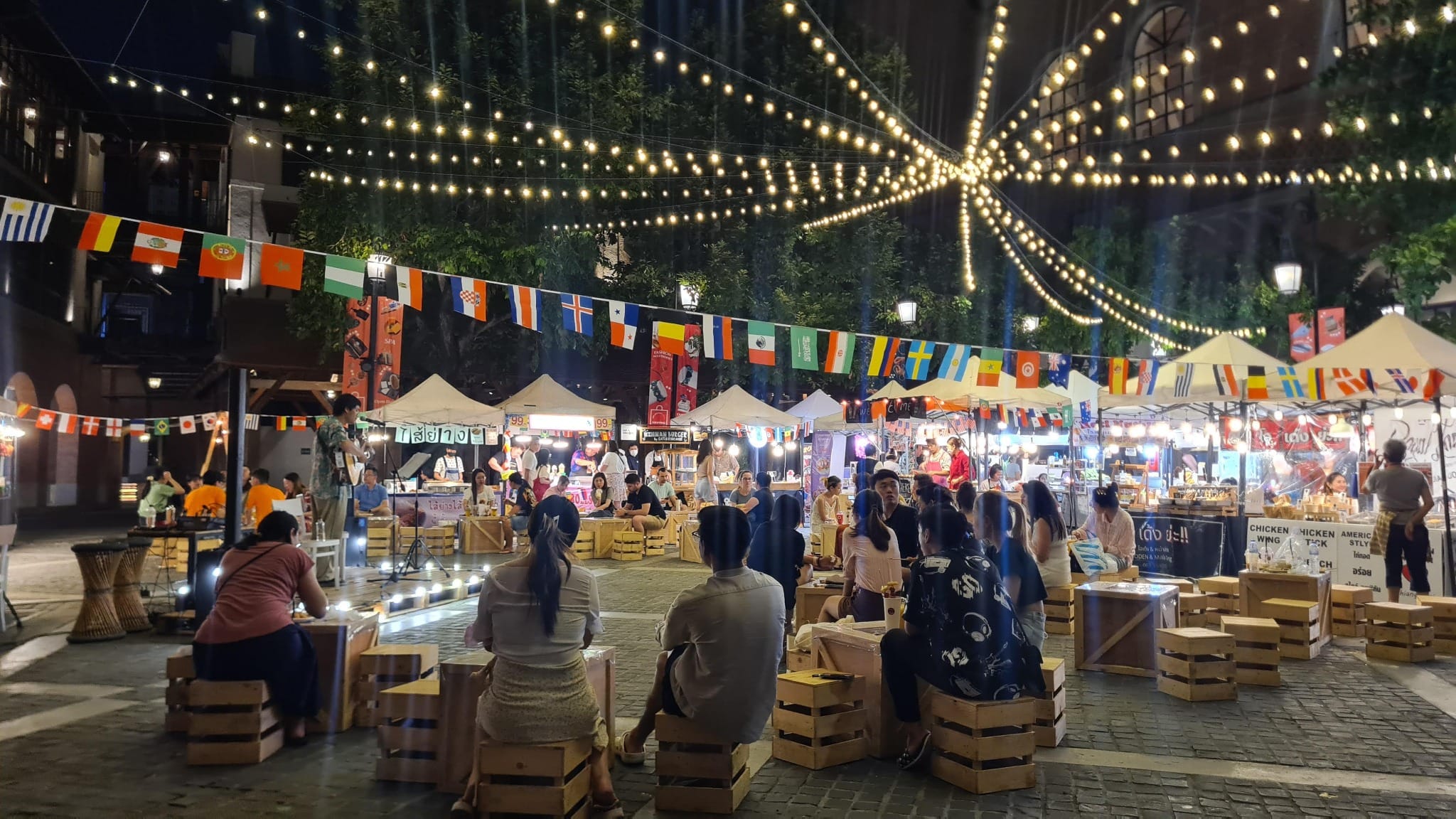
Markets, temples, neighborhood wandering, inexpensive food stops, and simply seeing how a city changes between morning and evening can fill a surprising amount of time.
This is not me claiming free experiences are spiritually superior.
Sometimes walking around somewhere new is simply fun.
Where I Would Spend Now
Transportation when it buys back meaningful time
Young me looked at every taxi fare as money I could spend somewhere else.
Current me asks a better question:
What does this purchase give me back?
If a few hundred baht saves two hours, keeps me from arriving exhausted, removes an unnecessary safety issue, or gets me somewhere genuinely inconvenient to reach otherwise, I am much more likely to spend it.
Cheap is not always good value.
The one experience you actually came for
If you have wanted a northern Thai cooking class for years, take the cooking class.
If your priority is a mountain day, waterfall, or getting farther outside Chiang Mai, put money there.
On later trips, I started going farther out, including Chiang Rai and Bua Tong Sticky Waterfalls.
I am not saying you need a tour to see either place.
I am saying time and transportation have value too.
Accommodation with a useful location
Saving money on a room can make sense.
Saving 200 baht on a room and then spending the same amount every day getting back and forth from everything you want to see makes less sense.
For a short trip, compare room price + location + transportation + time rather than room price alone.
Safety and convenience
There are places where I still enjoy being stubbornly frugal.
Safety is not one of them.
Neither is spending half a day miserable to save an amount that no longer meaningfully changes my trip.
If You Only Have a Few Meals in Chiang Mai, Make Them Northern
Please do not come to Chiang Mai, eat pad Thai six times, and then report back that Thai food tastes the same everywhere.
Northern Thailand has its own food traditions.
Chiang Mai was one of the places that first taught me how regional Thai cuisine really is.
If food is one of the reasons you are going, this is also one area where I think a paid experience can be worth the money.
You can absolutely eat your way through Chiang Mai independently.
I did plenty of that.
But a good food tour or cooking class can give you more context for what is on the plate instead of simply handing you another plate.
What I Skipped at 23—and Whether I Was Missing Out
I still wanted to do everything on that first trip.
I did not walk to a waterfall and suddenly achieve enlightenment about the emptiness of consumer culture.
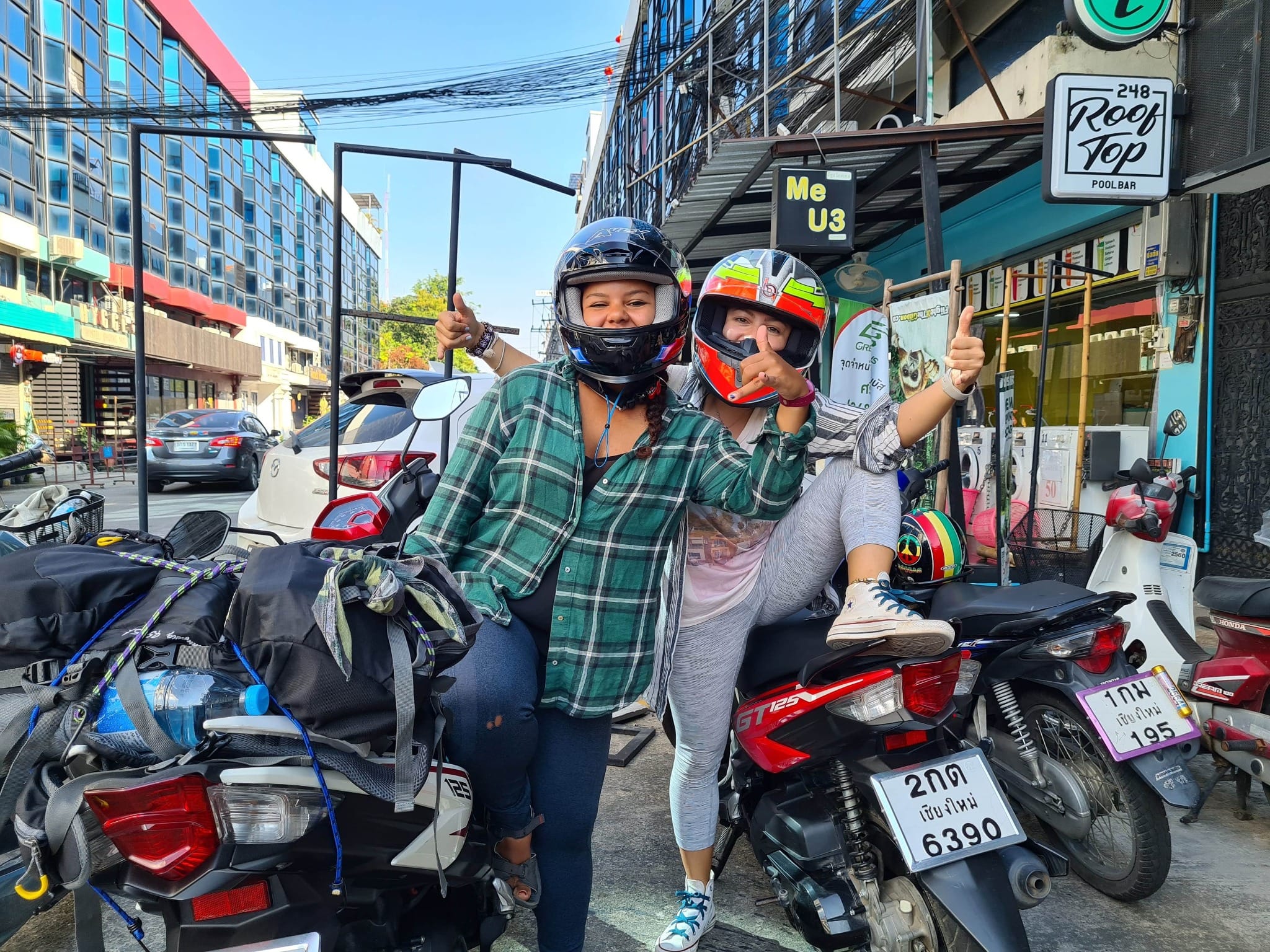
I wanted the cooking classes, spas, nicer rooms, private pools, motorbike, farther-out trips, and eventually the Mae Hong Son Loop.
What stopped me was money.
That's all.
I think being honest about that matters because low-budget travel gets romanticized in strange ways.
Having very little money does not make you a more authentic traveler.
Sometimes it just means you cannot afford something you would genuinely enjoy.
Years later, I returned with more room in my budget and did many of the things I had skipped.
- cooking classes
- farther-out trips
- Chiang Rai
- Bua Tong
- motorbike rental
- the Mae Hong Son Loop
I enjoyed those experiences.
But I did not suddenly think:
Oh. This is the real Chiang Mai. Twenty-three-year-old me was doing it wrong.
The first trip had already been a full meal.
Later trips were add-ons.
Very good add-ons.
Sometimes involving massages.
I support those.
Chiang Mai Was Also the Place I Almost Chose
After Chaiyaphum, I seriously considered moving to Chiang Mai.
I loved the city, and the number of schools made it feel like somewhere I could probably find another teaching position.
Then I found a teaching opportunity in southern Thailand.
That felt rarer.
The South was not objectively better than Chiang Mai.
It was simply an opportunity I was not sure would appear twice.
So I chose it.
I still sometimes wonder what my life would have looked like if I had picked Chiang Mai instead.
Sometimes there is no correct road.
You pick one good possibility and leave another good possibility behind.
What That $150 Trip Actually Gave Me
At 23, I did not know I would later travel through Myanmar, Vietnam, and Indonesia, complete the Mae Hong Son and Ha Giang loops, or spend years backpacking.
I only knew I had gotten myself to Chiang Mai.
I figured out where to stay, what I could afford, what I wanted badly enough to pay for, and what I could leave for later.
The Tesco backpack and I survived.
That did not magically put more money in my bank account or solve the rest of my life.
It gave me evidence: I can figure things out.
One successful trip made the next idea feel slightly less ridiculous.
That is still what I would tell someone whose dream trip does not fit the budget she has today.
- Do not romanticize being broke.
- Do not spend money you do not have because somebody online told you to “just book the flight.”
- Do not assume the version available to you right now is automatically too small to matter.
Maybe Chiang Mai is three nights today.
Maybe the cooking class comes later.
Maybe the private pool comes much later.
“Now” is not necessarily forever.
Getting From Bangkok to Chiang Mai
If you are building Chiang Mai into a larger Thailand trip, Bangkok is one of the most common starting points.
Depending on the trip you want, you can compare buses, trains, and other overland options rather than assuming you need to fly.
If you are traveling around Loi Krathong and Yi Peng, book earlier than you normally might. Festival dates can put extra pressure on rooms and transportation.
If Money Is Only Half the Question
Maybe the harder problem is not whether you can afford a bowl of khao soi.
Maybe it is figuring out how people get enough time, flexibility, or work freedom to go in the first place.
That question is part of NomaReina too.
I wrote more about the work structure that made this kind of travel possible in How Teaching in Thailand Made Travel Possible Without a Remote Job.
If you are interested in what years of actually living in Thailand changed about how I understood race, foreignness, welcome, and belonging, read Living in Thailand as a Woman of Color next.
Chiang Mai Budget FAQ
How much should I budget per day for Chiang Mai in 2026?
I would personally plan around ฿800–1,200 for a very lean trip, ฿2,000–3,500 for a more comfortable one, and ฿4,000–6,000+ if nicer accommodation and paid experiences matter to you.
Is Chiang Mai still good for budget travelers?
Yes. Local food, markets, walkable Old City sights, guesthouses, and shared transport still make it possible to keep costs relatively low if that is your priority.
What is worth paying more for in Chiang Mai?
For me: time, safety, a useful location, transportation that solves a real problem, and one experience I actually care about.
Do you need tours in Chiang Mai?
No. A lot of Chiang Mai works very well independently. I would use a tour or transfer when it solves a transportation problem or gives me context I actually want, not because every sight needs to be packaged.
What food should I try in Chiang Mai?
Start with khao soi, then look for gaeng hung lay, nam prik ong, nam prik num, khanom jeen nam ngiao, northern larb, and sai ua.
Can you travel to Chiang Mai from Bangkok overland?
Yes. Buses and trains connect Bangkok and Chiang Mai. Compare the current schedule before departure because timings and prices change.
Join the conversation
What did your first version of a dream trip look like?
Did you make a trip work on a much smaller budget than you imagined, or return later and experience the same place differently? See the Policies & Disclaimers.