
I moved to Thailand with about $2,000.
I was 22, burned out, working two jobs, and had absolutely no idea what I was doing with my life.
So naturally, I decided to move halfway around the world.
I had never been to Thailand before. I bought a one-way ticket, packed my bags, and figured I would stay for about six months.
I ended up staying for five years.
And somewhere in those five years, I ran out of money three times.
Not in a cute “I’m backpacking on a budget” way.
I mean I ate free food when I could. I dug through old backpacks and purses looking for coins I might have dropped. I paid attention to every baht because sometimes every baht actually mattered.
So was $2,000 enough to move abroad?
For me, yes.
Would I tell everyone thinking about moving abroad that $2,000 is enough?
No.
Because the number by itself does not tell you very much.
What did my $2,000 actually have to cover?
My one-way flight to Thailand cost about $880 in 2018.
The $2,000 was what I had left after buying the ticket.
At the time, I was volunteering and receiving a stipend of 15,000 baht per month rather than a normal salary.
My housing and visa costs were covered, which made an enormous difference.
My apartment also came as a fairly complete package. Wi-Fi, furniture, electricity, and other basic expenses were included.
I still needed to pay for food, personal expenses, travel, and any additional flights I wanted to take.
Most importantly, the $2,000 needed to last until I started receiving my stipend.
That is very different from arriving somewhere with $2,000 and immediately needing to pay a housing deposit, buy furniture, arrange transportation, pay for a visa, and support yourself without income.
The circumstances around the money matter as much as the number itself.

“Be careful. You only get 15 of those.”
One of my friends told me this when I first arrived.
She meant my 15,000 baht monthly stipend.
And she was right.
The stipend was low.
I understood how much I was getting paid. What I did not do particularly well was change the way I was spending to match it.
I was still behaving like someone traveling through Thailand instead of someone earning 15,000 baht and actually living there.
I did not budget properly. I did not consistently keep track of what I was spending. And sometimes I spent way above my means.
Looking back, I also would not have chosen the volunteer route.
I later realized I could have taken a paid teaching position through an agency, done very similar work, and earned roughly twice as much. I plan to write more about that separately, but if teaching is one route you are considering, I have already written about how teaching in Thailand made long-term travel possible for me without a remote job.
At 22, though, I was figuring all of this out as I went.
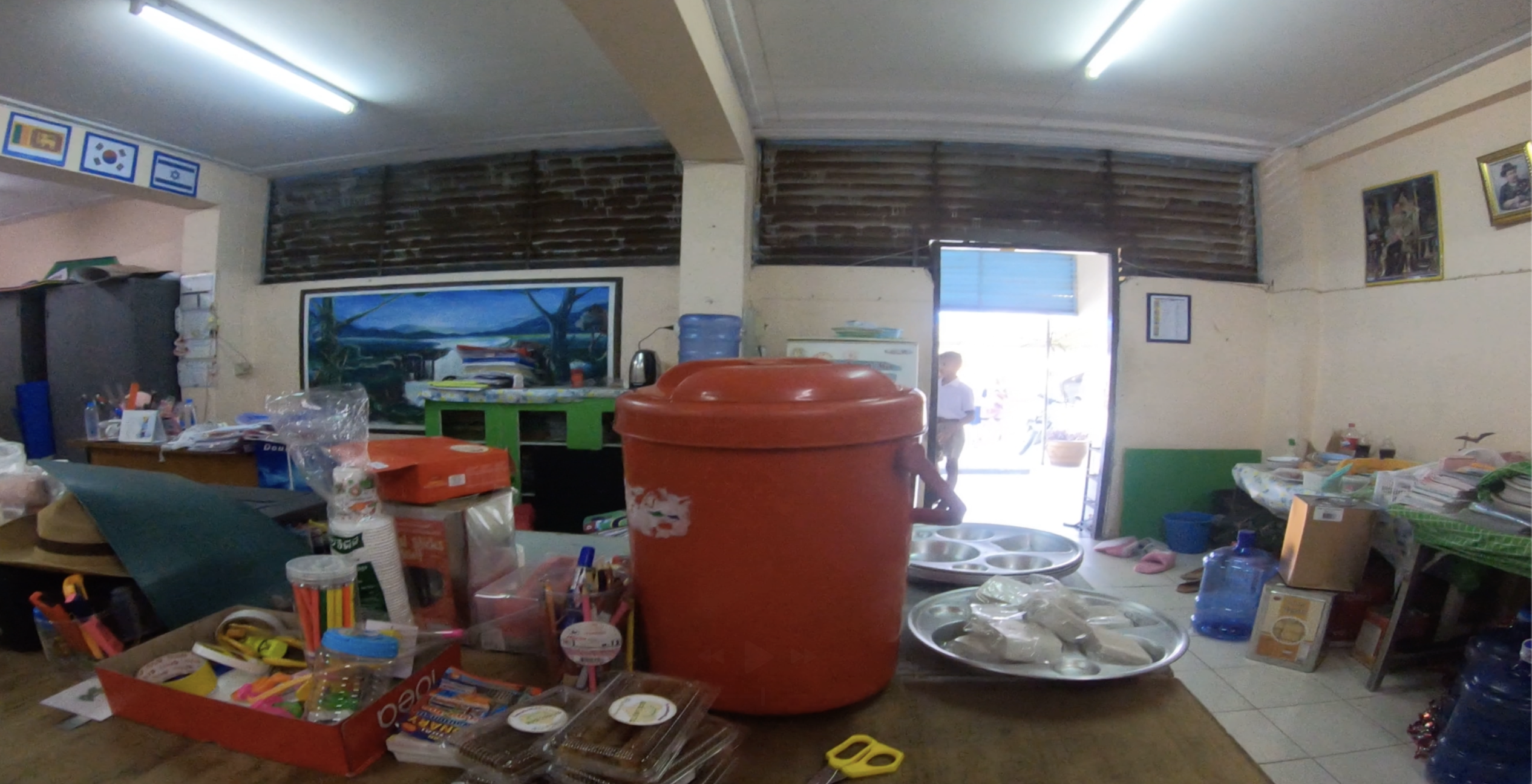
I ran out of money three times
When the money got tight, I became resourceful.
If there was free food, I ate it.
Sometimes I would ask for a second lunch at school and save it for dinner that night.
I searched old bags for forgotten coins.
I stopped buying things I did not really need.
I ate locally.
I bought things secondhand.
I also had something important that not everyone moving abroad has: a safety net.
I had friends and family I could ask for help if I truly needed it.
And because of the exchange rate, relatively small amounts of money sent from the United States could go much further for me in Thailand.
I could ask someone for $30. For them, that might not have been an enormous amount of money. For me, it was roughly 1,000 baht.
At certain points, 1,000 baht felt like a lot.
But having people I could call and actually asking them for help were two different things.
I did not ask often.
I did not want people back home to think I had failed, or that moving to Thailand was not working. I am the type of person who will usually try to tough something out first.
During my first eight months in Thailand, I lost about 30 pounds because of how aggressively I was cutting my budget, including food.
I do not recommend this strategy.
At the time, I did not even mind the weight loss itself. I understood that everything comes with a price, and I had decided this was a price I was willing to pay for the life I wanted.
Someone else might hear that and say, “Absolutely not. That price is too high.”
I would agree with them.
It is their life, not mine.
Eventually, I stopped spending like a tourist
Over time, I got much better at actually living in Thailand.
I learned where to shop and when.
I learned which markets charged local prices and which catered more to tourists.
I bought things through Facebook Marketplace and from friends who were leaving the country.
Thailand has a very transient foreign community. People come and go constantly, which means someone is almost always selling a motorbike, furniture, kitchen equipment, clothes, or something else they no longer need.
Often for half of what it would cost new.
I also got better at budgeting.
Instead of deciding what I wanted to do and then figuring out whether I could afford it, I started with what I was actually earning.
Then I planned my life from there.
Eventually, I started leaving myself a little margin because I did not want to live paycheck to paycheck.
I was not suddenly making huge amounts of money.
I had just gotten better at living within the amount I had.

Later, I had to figure things out on my own
When I moved south to work as a teacher at a school, my situation changed.
I needed to find my own apartment.
I needed transportation, which meant getting a motorbike.
There was no relocation person waiting to walk me through every step.
But I was not completely alone either.
Coworkers would say things like, “I know someone who is renting a place. I’ll give you their number.”
That kind of informal help made a huge difference.
It did not take long to find somewhere to live. I stayed in that first place for about six months before moving into something bigger.
Sometimes support when you move abroad does not look like a formal relocation package.
Sometimes it is just someone saying, “Call this person.”
That still counts.

How much should you save before moving abroad?
I think people often want one number because it makes the decision feel simpler.
Save $5,000. Save $10,000. Save six months of expenses.
But I think a better way to approach it is to ask what your money actually needs to do for you.
And I would ask one question that savings calculators usually cannot answer:
I do not mean, “How much suffering proves you want it badly enough?”
I mean: What are you genuinely willing to give up, delay, or live without for this experience, and what would make the price too high for you?
For me, one of those trades was losing about 30 pounds during those first eight months because I was cutting my budget so hard. I look back at it as trading 30 pounds for the experience of a lifetime, and I would make that trade again.
That does not mean you should.
Your answer can be completely different from mine and still be the right answer.
Getting there
Flight, luggage, visa costs, temporary accommodation, housing deposits, transportation, and what you need immediately after arrival.
Your normal life
Rent, food, transportation, phone service, healthcare, entertainment, personal care, and the expenses that make your actual life work.
Something goes wrong
A broken laptop. Medical care. A housing problem. A job falling through. An emergency flight. Give yourself some room.
Change your mind
Having enough money to leave does not mean you are planning to fail. It means one bad situation does not get to make the decision for you.
This is why I now think more about financial runway than one magic savings number.
If your income stopped tomorrow, how long could you support yourself?
Someone moving abroad with employer-provided housing and a guaranteed paycheck can take a different financial risk from someone arriving with no job and hoping to figure things out later.
That does not make one person braver than the other.
Their circumstances are simply different.
30 Questions to Ask Yourself Before Moving Abroad
Money is only one part of the decision. Use these 30 questions to think through work, lifestyle, community, timing, expectations, and what you actually want your life abroad to look like.
- Money
- Work
- Community
- Lifestyle
- Timing
- Expectations
Free. Sent by email. You'll also join the NomaReina list and can unsubscribe anytime. See the Policies & Disclaimers.
Money was not actually what made me want to leave
As tight as money sometimes became, I was prepared to make it work.
I never seriously thought, “I have to leave Thailand because I cannot afford this.”
I could find another meal. I could cut another expense. I could ask someone for help if I absolutely had to.
The moments when I thought about going home were usually because of something else.
Social isolation.
Friendships.
Feeling like I had not found my place yet.
Moving abroad is often described as this instant social adventure. You arrive, meet people from twelve countries, everyone goes out together, and suddenly you have an international chosen family.
Sometimes that happens.
Sometimes you are sitting alone wondering why you moved halfway around the world.
There was a period when I genuinely did not like living in Thailand.
But I kept going.
Eventually I found my people. I built routines. I learned how things worked.
Thailand stopped feeling like this dramatic thing I had done and simply became where I lived.
That took much longer than buying the plane ticket. If this is the part of moving abroad you worry about most, I wrote a separate guide on making friends after moving abroad when you do not know anyone.
Would I tell 22-year-old me that $2,000 was enough?
Yes.
I actually would.
I would tell her:
But I would also tell her what that yes is going to require.
You are going to have to sacrifice.
You are going to have to say no to things you want to do.
You are going to have to ask for a second lunch at school and save it for dinner.
You are going to have to be careful with every coin sometimes.
And you are going to have to get much better at managing money than you are right now.
But it is possible to arrive with almost nothing and make something out of it.
I would make different choices now.
I would have taken the better-paid job.
I would have budgeted properly from the beginning.
I would have kept a larger emergency fund.
I would have understood my safety net better.
But I am also glad I did not convince myself that I needed to have my entire life perfectly organized before I could go.
Twelve months became five years.
And somewhere in the middle of stretching 15,000 baht, finding apartments through friends of friends, buying other people's secondhand things, figuring out which markets to shop at, and building a life I had not really planned for, Thailand became home.
I look at that decision differently now than I did at 22. I wrote more about that shift in Moving Abroad in Your 30s: What Nobody Tells You Before You Go.
So, can you move abroad with $2,000?
Yes.
Sometimes.
I did.
But $2,000 worked for me because housing and visa costs were covered at first, I had income coming, and I had people I could call if things got really bad.
Without those things, the same $2,000 would have carried much more risk.
That is the part I think matters most.
Do not only ask: How much money do I need to move abroad?
Ask: What does my money need to cover once I get there?
Those are not quite the same question.
You do not have to have everything figured out.
I certainly didn't.
But knowing what you are walking into gives you a much better chance of making it work.
And once you know the money side is possible, the next question is whether the place itself fits the life you want. Start with How to Choose a Country to Move Abroad To.
Figure out what you actually need from the move.
Get 30 Questions to Ask Yourself Before Moving Abroad. It is designed to help you think beyond the savings number and look at the life you would actually be building.
Free. Sent by email. Unsubscribe anytime.
Join the conversation
What would you be willing to sacrifice to make moving abroad possible?
A smaller apartment, fewer nights out, a lower salary, more uncertainty, or something else? And what would be too high a price for you? See the Policies & Disclaimers.