
There are two images that seem to represent Thailand every November.
In one, small flower-covered baskets carrying candles float across the water.
In the other, glowing lanterns rise into the night sky.
Search for either image long enough and eventually someone will call both of them Loi Krathong.
That is not quite right.
The baskets floating on the water belong to Loi Krathong, a festival celebrated across Thailand.
The lanterns most people associate with Chiang Mai belong to Yi Peng, a Northern Thai tradition rooted in Lanna culture.
They happen around the same time. In Northern Thailand, the celebrations overlap.
That is why travelers often experience them together.
But they are not the same thing.
And if you are wondering which one I recommend?
Both, if you can.
Loi Krathong vs. Yi Peng: The Quick Answer
| Loi Krathong | Yi Peng | |
|---|---|---|
| Main tradition | Floating decorated krathongs on water | Northern/Lanna lantern and light traditions |
| Where | Throughout Thailand | Northern Thailand |
| What you may see | Krathongs, candles, rivers, ponds, community celebrations | Hanging lanterns, temple lights, religious ceremonies, and sometimes khom loi |
| Chiang Mai | Yes | Yes |
| Need a ticket? | Generally no for ordinary public celebrations | No for Yi Peng itself. Some organized mass-lantern events are ticketed. |
| My recommendation | Experience it | Experience this too if you are in the North |
One of the things I learned after years of living in Thailand was how much the country changes from region to region.
The Thailand I first knew while living in Isan did not feel the same as the South I later called home. Neither felt exactly like Northern Thailand or Bangkok.
Loi Krathong and Yi Peng are one very visible example of that regional difference.
My First Loi Krathong Started in a Schoolyard in Isan
I had only been living in Thailand for about two months.
I was teaching children around the equivalent of second and third grade in Isan, Thailand's northeastern region.
On the day of Loi Krathong, the students got to miss some of their normal classes.
This was obviously excellent news if you were eight years old.
Instead of sitting inside, they were making krathongs.
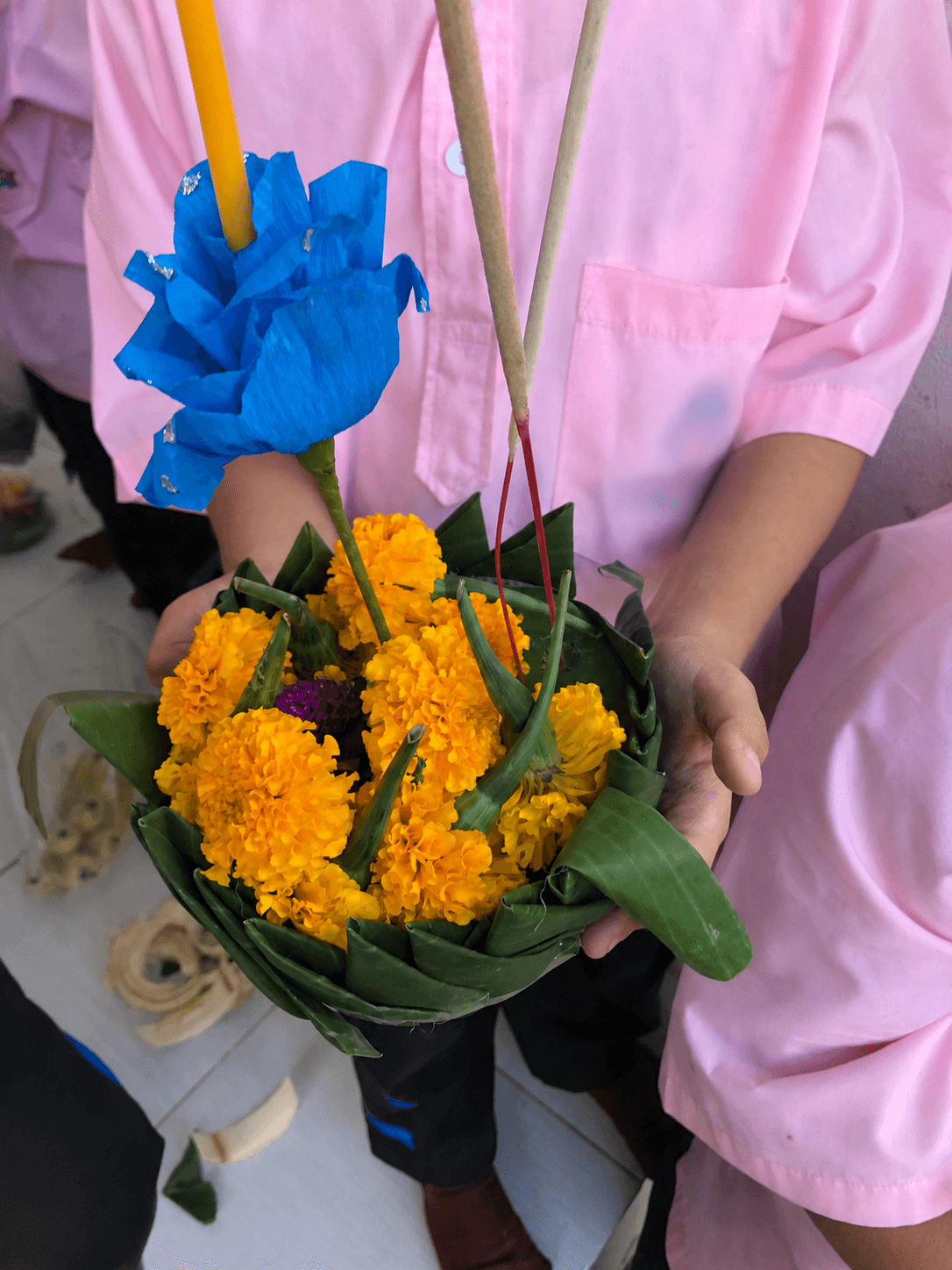
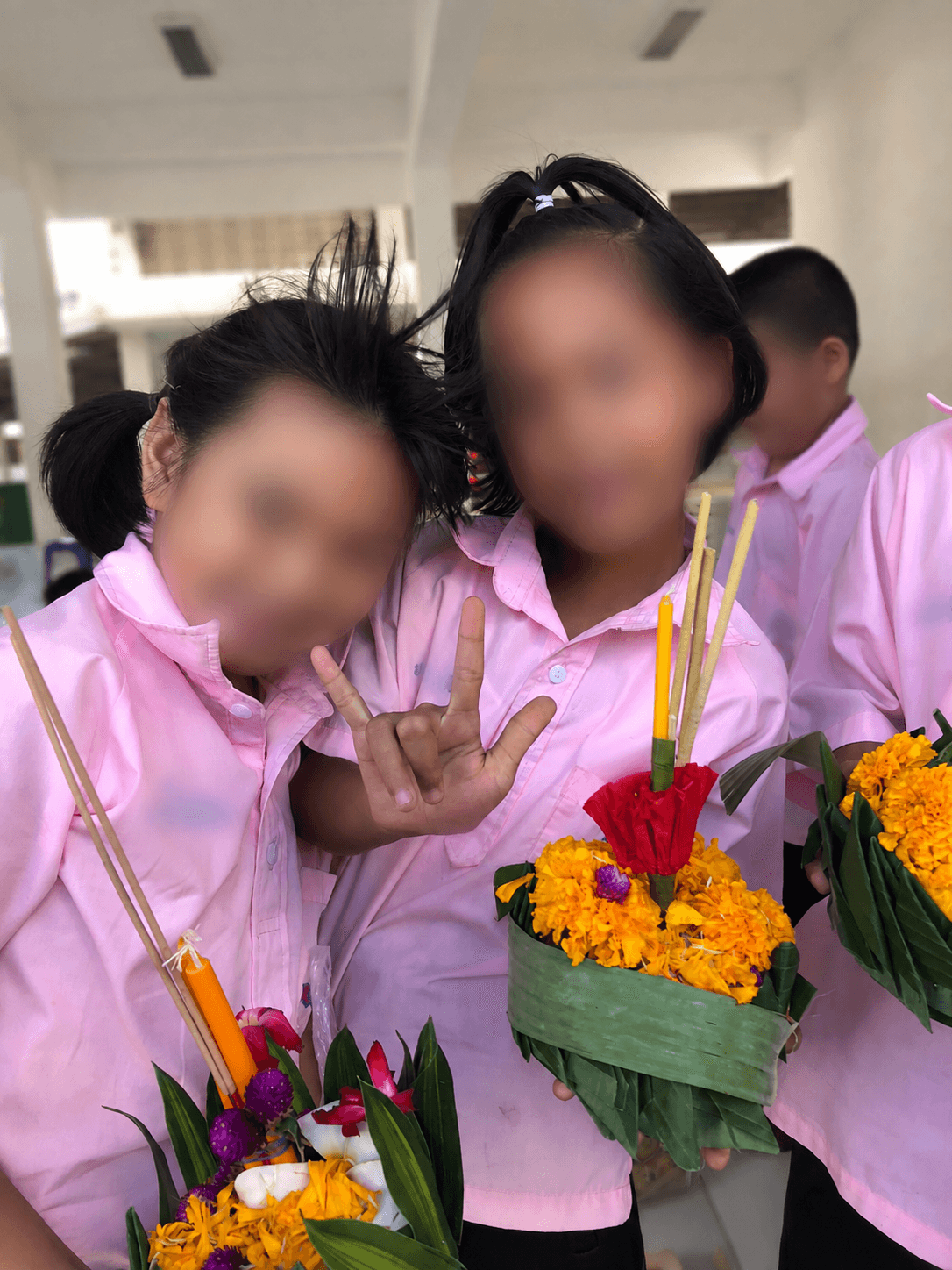
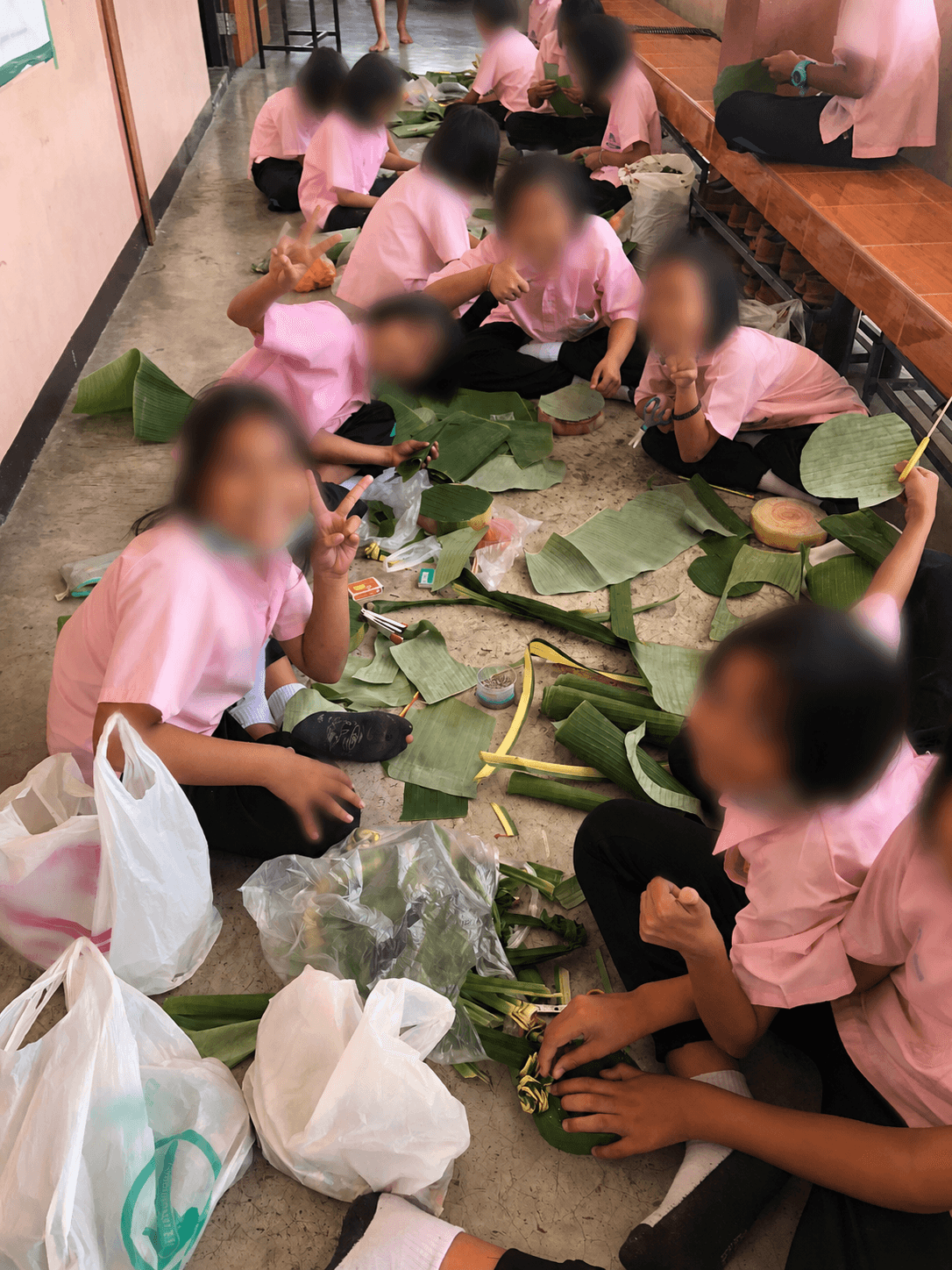
There were banana leaves and flowers everywhere.
Pieces were waiting to be folded and pinned together. Students moved between each other, comparing their work and offering extremely important opinions about everyone else's.
Every child seemed to have something particular to say about theirs.
I understood almost none of it.
The students taught me Thai too
My Thai was terrible.
If I am honest, my Thai still is not exactly television-worthy now.
But I loved learning from the students.
They would point at something and give me the Thai word.
I would repeat it.
Sometimes successfully.
Sometimes less successfully.
Once I tried to tell a little boy dii mak, essentially, “Very good!”
What came out sounded much closer to phii mak.
Very ghostly.
The look of concern on his face told me immediately that something had gone wrong.
What I remember most, though, was how happy the students were.
They compared their krathongs. They inspected each other's work. They showed them off to friends and teachers.
The normal school schedule had changed, and the children knew something special was happening.
That ordinary school day is one reason my years teaching there became about much more than work. I wrote more about that in How Teaching in Thailand Made Travel Possible Without a Remote Job.
Why Do People Float Krathongs?
There is not one perfectly neat answer.
Common explanations include:
- gratitude toward water
- asking forgiveness for how humans use and pollute water
- releasing bad luck, anger, or regret
- making wishes
- Buddhist ideas of merit and reflection
- continuing a family or community tradition
And some people are probably enjoying Loi Krathong because it is Loi Krathong.
That matters too.
When I first started traveling, I wanted traditions explained more cleanly than people actually behave.
What does this mean?
Give me the answer.
Then I understand the culture.
Living abroad made me less confident in that approach.
Ask ten Americans what Christmas means and you might hear religion, family, gifts, nostalgia, stress, grief, food, or nothing much at all.
Why would I expect every Thai person standing beside the water to be having exactly the same internal experience?
A tradition can carry shared cultural meaning while the people participating in it remain individuals.
I came to the same realization from another angle in Christmas in Thailand.
That Night, I Floated My First Krathong
I did not make one with the students that afternoon.
That night, I went down to the river.
Someone was selling krathongs nearby, and I bought one for around 50 baht.
That is what I paid then, not a current price guide.
I lit it, placed it in the water, and watched it move away.
I wish I could tell you exactly what I wished for.
I cannot.
I had a lot on my mind then.
I think I wanted to let go of the past.
Memory kept the picture more faithfully than it kept the thought.
What I remember clearly is the small light moving across the water.
At the time, it felt like one of the most interesting things I had ever done.
I celebrated Loi Krathong for several years after that.
The first felt enormous.
Then another year came.
And another.
Eventually, something that once seemed extraordinary could arrive during a fairly normal week.
It did not mean I stopped appreciating it. It meant I no longer experienced it entirely as a visitor.
Where Does Yi Peng Fit Into This?
This is where online travel photos make things confusing.
If you search for Loi Krathong, sooner or later you will see hundreds of glowing lanterns over Chiang Mai.
Those sky lanterns belong to Yi Peng, a Northern Thai festival connected to the historical Lanna region.
Yi Peng involves much more than sky lanterns.
- lanterns hanging around temples and homes
- small lamps and candles
- religious observances
- decorations and community events
- sometimes permitted khom loi sky-lantern releases
Loi Krathong and Yi Peng happen around the same period.
In Chiang Mai, you may see krathongs on the Ping River, lanterns decorating temples, ceremonies, music, and permitted lantern activity during the same festival period.
From the street, it can easily feel like one enormous celebration.
There are still different regional traditions underneath it.
That distinction became more interesting to me once I stopped treating Thailand as one uniform culture.
I first lived in Isan. Later I lived in Southern Thailand. I traveled through the North and spent plenty of time in Bangkok.
Food changed. Language changed. Cultural traditions changed. The way tourism shaped places changed.
I have written about that same realization in Living in Thailand as a Woman of Color and why my opinion of Phuket changed.
Yi Peng is not simply the prettier version of Loi Krathong.
It is a Northern tradition with its own history.
Which Should You Experience?
Both, if you can.
If you are already in Northern Thailand during the festival period, I would not choose between them.
- Experience Loi Krathong.
- Experience Yi Peng.
- Pay attention to how they overlap.
- Pay attention to where they are actually different.
But if you are elsewhere in Thailand during Loi Krathong, I would not cross the country because Instagram convinced you the celebration only counts if lanterns fill the sky.
It does not.
A Loi Krathong night in Isan is still Loi Krathong.
So is one in Bangkok.
So is one in Southern Thailand.
If You Want Both, Chiang Mai Is the Obvious Choice
Chiang Mai is the easiest place to experience Loi Krathong and Yi Peng during the same trip.
Expect crowds.
A lot of them.
That does not automatically make the experience worse. A huge public celebration can be fun precisely because thousands of people are there.
Just do not confuse scale with cultural superiority.
If you are planning a longer stay, my Chiang Mai on a Budget guide covers what I would save on, what I would spend on, and how my choices changed after years of living in Thailand.
If You Mainly Want Loi Krathong, You Have Options
- Sukhothai is one of Thailand's best-known Loi Krathong destinations.
- Bangkok makes sense if it is already part of your itinerary.
- Isan gives you a different regional context.
- If you are elsewhere in Thailand, check the celebration where you already are before assuming you need to travel somewhere “better.”
The question I find more interesting now is not “Where is the best Loi Krathong?”
It is “What does Loi Krathong look like here?”
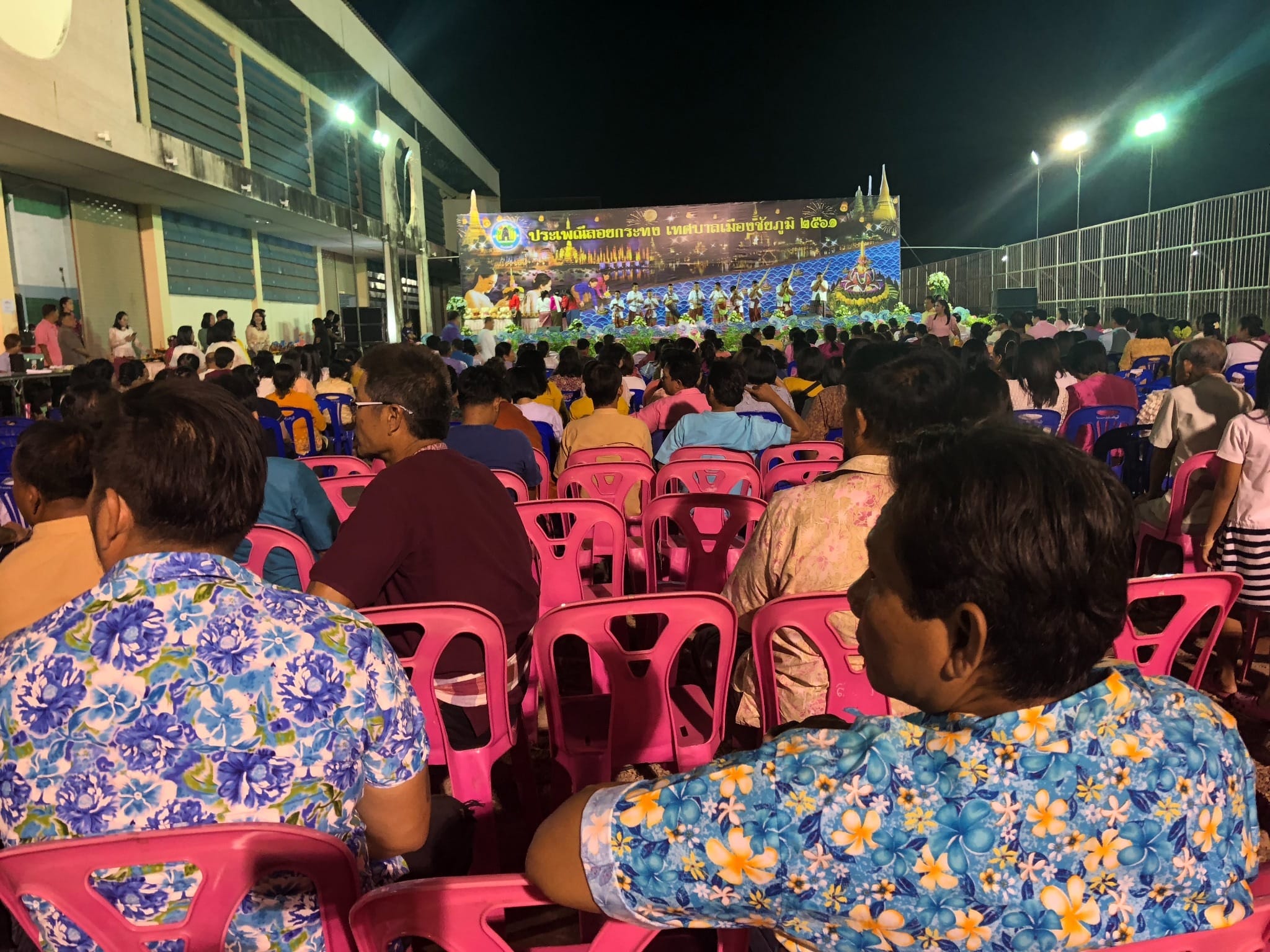
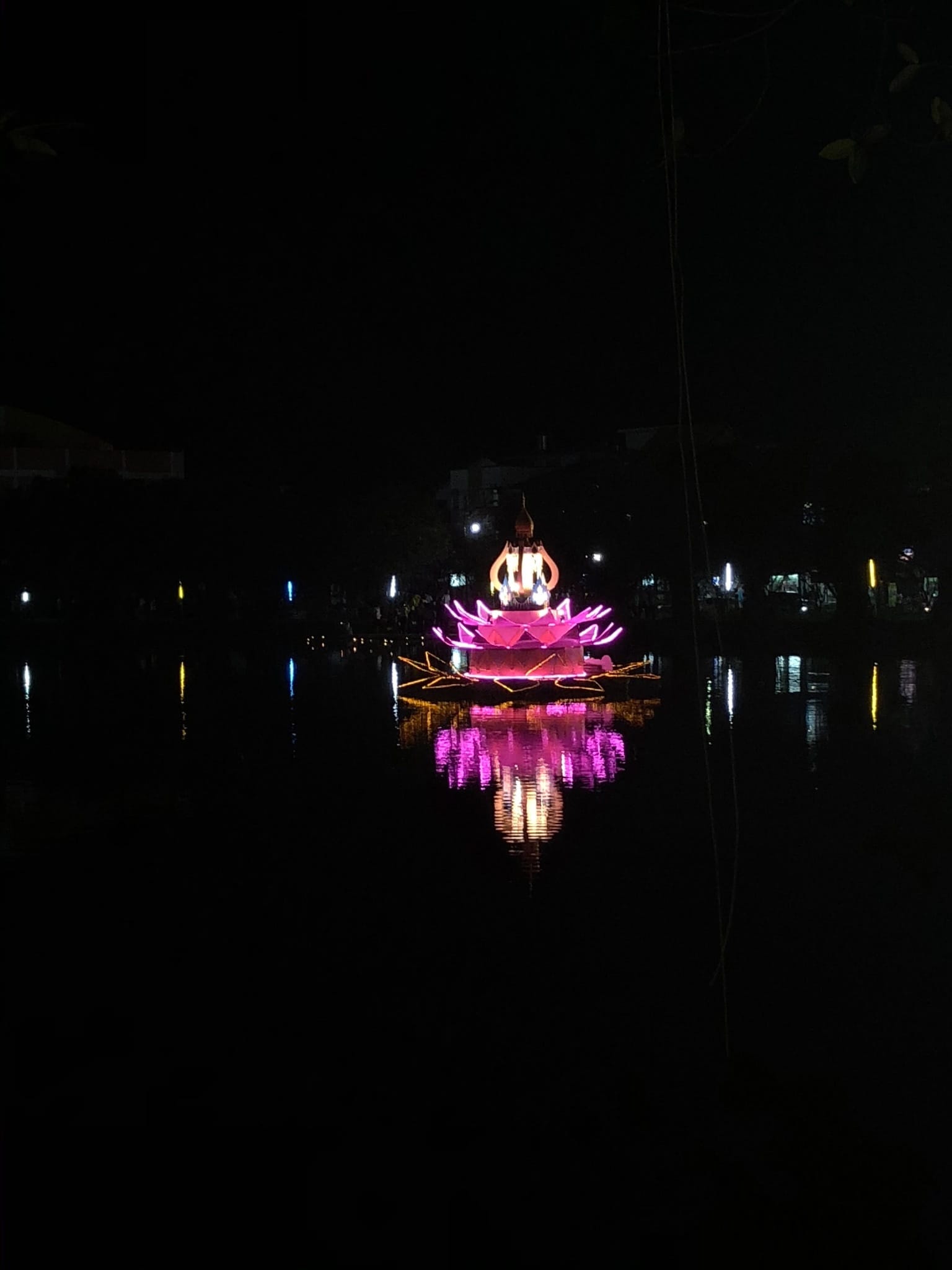
When Are Loi Krathong and Yi Peng in 2026?
Both festivals follow lunar calendars, so the Western-calendar dates change from year to year.
For 2026, major Chiang Mai Loi Krathong and Yi Peng events are centered on November 24–25, 2026.
If the festivals are the reason you are booking an international trip, verify that year's dates before buying nonrefundable travel.
Do You Need a Paid Yi Peng Tour or Ticket?
No. And this is one event where I genuinely think you can do it yourselves.
Yi Peng is a cultural and religious festival, not one commercial event.
You can experience:
- lantern decorations
- temple activity
- lights and candles
- the atmosphere around Chiang Mai
- public Loi Krathong celebrations
- community events
You do not need to buy a tour simply to say you experienced Yi Peng.
- you are comfortable navigating Chiang Mai independently
- you mainly want public festival atmosphere
- you do not need every hour planned
- you are happy checking the current local rules yourself
- you want organized transportation
- you prefer a set schedule
- planned cultural activities matter to you
- you want someone else coordinating the logistics
There is one important distinction:
Experiencing Yi Peng is not the same as attending a ticketed mass sky-lantern release.
Some large synchronized lantern events outside the city are private, ticketed experiences.
And even if you buy a lantern, that does not mean you can release it wherever you want.
Khom loi involve fire and aircraft. Chiang Mai authorities regulate releases because of aviation, fire, and public-safety risks.
Approved locations, dates, and times can change.
If you cannot personally launch a lantern, you have not failed at Yi Peng.
You do not have to personally perform every part of somebody else's culture in order to experience it.
Getting From Bangkok to Chiang Mai for Yi Peng
If you are starting in Bangkok, Chiang Mai is far enough away that I would plan the transfer rather than improvise it during festival week.
Popular options include flying, taking an overnight train, or traveling by long-distance bus.
If you are comparing the overland route, this 12Go option goes to Arcade Chiang Mai Bus Station.
Festival week is one of the times I would book transportation and accommodation earlier than I normally might.
Then I Moved South and the Ocean Destroyed My Symbolism
Years after my first Loi Krathong in Isan, I celebrated in Southern Thailand.
By then, I knew the routine.
- Buy or make the krathong.
- Light the candle.
- Think profound thoughts.
- Release it.
- Watch it float dramatically toward another life.
At least that was the plan.
I put mine into the ocean.
A wave immediately knocked it over.
The flame went out.
Finished.
All my hard work ruined in seconds.
I had imagined this little glowing krathong drifting farther and farther away, carrying whatever I had decided to release with it.
Instead:
wave.
Dead on arrival.
There is probably some profound metaphor hiding in there about how little control we have over what happens after we decide to let something go.
I am going to resist it.
Sometimes the ocean just ruins your krathong.
How I Would Participate Now
There is an environmental contradiction built into the modern celebration.
The symbolism of thanking or apologizing to water becomes uncomfortable if the result is filling that water with waste.
Natural materials are preferable to foam and plastic, but even biodegradable material does not disappear instantly.
If I were participating now, I would:
- choose a locally made krathong using natural materials
- share one if I were with other people
- use a designated release area
- follow local rules
- check current lantern regulations if I were in Northern Thailand
- take my photos and then put my phone down
Visitors are welcome to participate in many public celebrations.
That does not mean the celebration exists for us.
What I Actually Miss Is the Community
When I think about Loi Krathong now, the first thing I miss is not actually my krathong floating away.
I think about:
- everyone being outside
- families gathered together
- children running around
- music
- food everywhere
- people talking
- people eating
The ritual mattered. The community around it is what made the night feel alive.
That remained even after the festival itself stopped feeling new to me.
And when I think about my first one, I still go back to the schoolyard.
This was before I knew the difference between Loi Krathong and Yi Peng, before I understood Lanna history, and before I had lived in enough parts of Thailand to understand how regional the country could be.
There were just children showing me things they had made with their own hands.
And me, barely understanding what anyone was saying, trying very hard not to call another child a ghost.
Is Loi Krathong Worth Planning a Thailand Trip Around?
I think it can be, especially if festivals and cultural traditions are already part of why you travel.
But plan around the experience, not around recreating one photograph.
- the dates change
- local programs vary
- lantern regulations can shift
- weather is another variable
- crowds are part of the experience
If experiencing both Loi Krathong and Yi Peng matters to you, Northern Thailand makes the most sense.
If you happen to be elsewhere during Loi Krathong, pay attention to the celebration around you instead of assuming you are in the wrong place.
Sometimes seeing how a national tradition changes from one region to another is the more interesting experience anyway.
Loi Krathong & Yi Peng FAQ
Is Loi Krathong the same as Yi Peng?
No. Loi Krathong centers on floating krathongs on water and is celebrated throughout Thailand. Yi Peng is a Northern Thai/Lanna festival involving lantern and light traditions. They overlap around the same time in Northern Thailand.
What does Loi Krathong mean in Thai?
Loi means to float. A krathong is the decorated vessel placed on the water. The name essentially means to float a krathong.
Can tourists participate in Loi Krathong?
Yes. Visitors commonly participate in public celebrations. Follow local practices, use appropriate materials, and remember that you are joining an existing cultural tradition.
Do you need a paid tour for Yi Peng?
No. I think this is one festival travelers can experience independently. A paid organized option makes sense only if you prefer transportation, a planned schedule, coordinated activities, or a private ticketed lantern event.
When are Loi Krathong and Yi Peng in Chiang Mai in 2026?
Major Chiang Mai events are centered on November 24–25, 2026. Check the current local program shortly before your visit because public-event schedules and permitted lantern-release windows can change.
Can you release a sky lantern anywhere in Chiang Mai?
No. Lantern releases are regulated for aviation, fire, and public-safety reasons. Use only current approved locations and times.
For the parts that change, check current sources.